A Life of Presence, Power, and Community
Shyyell Diamond Sanchez-McCray was more than a headline.
She was a performer. A community builder. A voice that refused to stay quiet.
Known affectionately as “Mable” among friends and chosen family, Sanchez-McCray built her life in both Virginia and North Carolina through drag performance, pageantry, and grassroots activism. She was a fixture in the Charlotte Black Pride pageant circuit, earning titles including Miss Mayflower EOY (2015) and Miss Charlotte FFI-at-Large (2020).
But her impact extended far beyond the stage.
In 2023, she joined a boycott of a Charlotte LGBTQ+ bar after allegations of racism against Black patrons—putting her voice on the line not just for queer rights, but for racial justice within queer spaces themselves.
She lived at the intersection of identities—and she fought for all of them.
The Night of March 13
On March 13, 2026, Sanchez-McCray was found dead in a home in Petersburg, Virginia, after suffering multiple gunshot wounds. She was 42 years old.
Police entered through what was described as an “unsecured door” and discovered her body at the scene.
Details remain limited. No clear public updates on suspects or motive have been released as of this writing.
And almost immediately, something else happened.
She was misgendered.
Misgendered in Death
Early reports from police and media outlets referred to Sanchez-McCray incorrectly—using language that erased her identity in the very first public telling of her death.
More Stories from QueerDispatch
This is not a small mistake.
It is a pattern.
Misgendering in police reports and media coverage has long been identified by advocates as a major barrier to accurately tracking violence against transgender people. When victims are recorded under the wrong gender:
- Their deaths may not be counted in official statistics
- Their identities may never be corrected
- Their stories may disappear entirely
In Sanchez-McCray’s case, her community stepped in—correcting the record, reclaiming her name, and ensuring she would be remembered properly.
But not every victim has that.
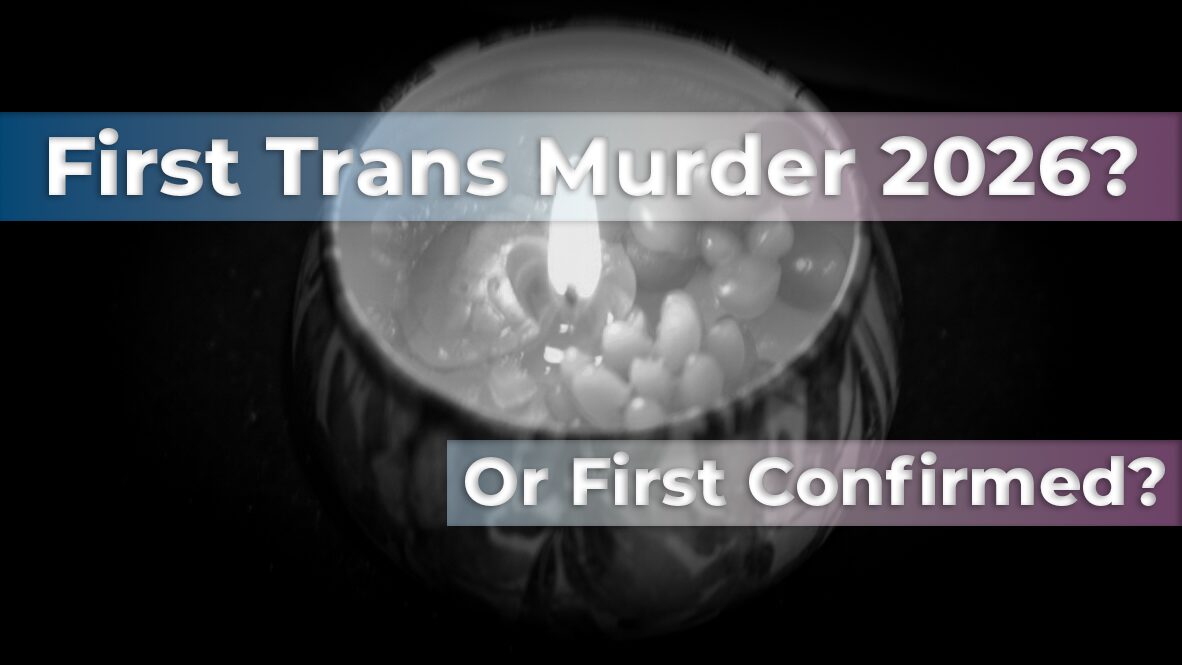
“First of the Year”—Or First We Know About?
Sanchez-McCray is currently recognized as the first confirmed transgender homicide victim of 2026.
But that designation comes with an uncomfortable truth:
We don’t actually know if she was the first.
Advocates warn that misreporting, deadnaming, and systemic data gaps mean other trans victims may already exist in 2026 statistics—but remain unrecognized.
As one tracking group noted, misgendering can “obfuscate” deaths, effectively erasing victims from public record.
So the question becomes:
How many names are we missing?
A Pattern That Has Not Slowed
The broader context is stark.
In 2025:
- At least 27 transgender people were killed in the United States
- A majority were Black trans women
- Firearms were the most common cause of death
These numbers are already considered undercounts.
Sanchez-McCray’s death does not exist in isolation—it sits within a pattern of violence shaped by:
- Transphobia
- Racism
- Economic marginalization
- Systemic neglect
And critically, a failure of institutions to document these deaths accurately
Remembering Mable
In the days following her death, tributes poured in.
Friends, fellow performers, and community members remembered her as:
- A force on stage
- A mentor and promoter
- A woman who showed up for others
Drag performer Kennedy Davenport wrote simply:
“I will certainly miss you my sister.”
Her funeral is scheduled for March 27 in Petersburg, where her community will gather—not just to mourn, but to remember her fully.
Final Thought: Say Her Name—And Count Her Life
Shyyell Diamond Sanchez-McCray should not be remembered only as:
- “The first case of 2026”
- A statistic
- A headline
She should be remembered as a whole person.
But honoring her also means confronting the system that failed her—even in death.
Because when victims are misgendered:
- Justice becomes harder to pursue
- Violence becomes easier to ignore
- And entire lives risk being erased from history
So we say her name.
And we ask the harder question:
Who else haven’t we counted yet?
Follow this blog on Mastodon or the Fediverse to receive updates directly in your feed.

Kirstyn Piper Plummer is a Mom, Wife, Photographer, Reporter, IT Administrator and many other things.


Read More
- UNDER THE RAINBOW: Sometimes I Hope NOTHING Happens at All
- Hungary Moves to Undo Anti-LGBTQ+ ‘Propaganda’ Rules as Turkey Detains 150 Protesters
- Saddle Lake Cree Nation Turns Treaty Rights Into a Shield for Trans Lives
- New Mexico Says It Will Use State Money to Keep Gender-Affirming Care Available to Trans Youth