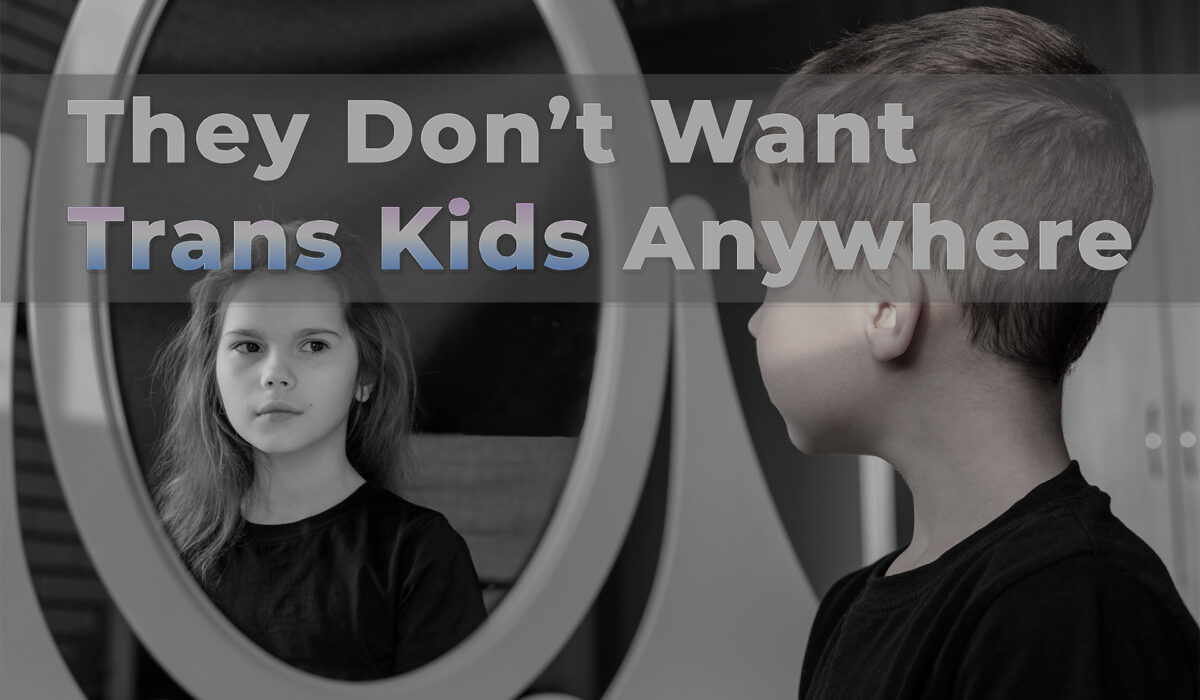
Across continents, a pattern is emerging: transgender youth are being pushed out of schools, activities, and everyday spaces—one policy at a time.
A Line Is Being Drawn—and It’s Around Children
In the past year, anti-trans policy has shifted in a critical way.
It’s no longer just about sports teams or bathrooms.
It’s about who gets to exist in public life at all.
From classrooms in the United States to youth organizations in the United Kingdom, and legislative proposals in countries like India, transgender children are increasingly being systematically excluded from the spaces where identity, belonging, and community are formed.
This is not happening in isolation.
It’s happening everywhere. And it’s accelerating.
The UK: When Scouting Becomes a Battleground
In the United Kingdom, Girlguiding—the country’s largest organization for girls—recently announced that transgender girls will no longer be allowed to participate, giving them until September 2026 to leave.
The decision follows a broader legal shift redefining sex in strictly biological terms.
For many, the message is clear:
Trans girls are not girls—and therefore do not belong.
The impact is immediate and deeply personal:
More Stories from QueerDispatch
- Trans youth lose access to community, mentorship, and identity-building spaces
- Leaders and volunteers are reportedly considering resignation in protest
- Families are being forced to choose between safety and belonging
What was once a place for growth is becoming a site of exclusion.
The United States: Schools as the Front Line
In the United States, the battle is playing out most aggressively in schools.
Legislation and policy changes across multiple states have:
- Restricted bathroom access
- Banned participation in sports
- Limited or eliminated access to gender-affirming care
- Introduced “parental notification” rules that can force outing
School boards—once hyper-local and low-profile—have become ground zero in the fight over trans existence.
And the consequences are not abstract.
They show up as:
- Students skipping school to feel safe
- Increased mental health crises
- Entire families relocating across state lines
For trans youth, school is no longer just about education.
It’s about survival.
India and Beyond: Legal Identity Under Threat
Globally, similar patterns are emerging.
In India, proposed changes to transgender rights laws would:
- Restrict self-identification
- Require approval from authorities or medical boards
- Introduce punitive measures tied to identity recognition
Activists warn these changes would roll back years of progress, replacing self-determination with surveillance and gatekeeping.
And India is not alone.
Across multiple countries, governments are:
- Redefining gender in legal terms
- Restricting documentation changes
- Limiting access to public services
The result is a world where trans people are not just debated—but regulated out of visibility.
The Pattern: Not One Policy—A System
Individually, each of these policies may seem narrow.
A school rule here.
An organizational guideline there.
A legal definition somewhere else.
But together, they form a clear pattern:
Remove access. Remove recognition. Remove belonging.
This is what makes the current moment different.
It’s not just about disagreement.
It’s about systematic exclusion across every layer of public life.
A Personal Note: We Were Always Here
I grew up in the 80s and 90s.
Back then, transgender people didn’t “not exist.” We just weren’t allowed to exist out loud.
Representation was nearly nonexistent. When we did appear, it was as a punchline, a twist, or something to be laughed at. Sitcom humor turned our lives into jokes. The message was constant and clear:
Be quiet. Be invisible. Or be mocked.
And yet—we were still there.
Because a lack of representation doesn’t stop trans kids from existing.
It teaches them something far more dangerous:
That they are wrong.
That they are alone.
That they are not allowed.
For some, that message doesn’t just hurt.
It breaks them.
It plants the idea—quietly at first, then louder over time—that maybe the world would be easier if they simply weren’t in it at all.
That’s the reality people don’t want to confront.
It Didn’t Start This Way—And It Didn’t Have to Go This Far
There was a moment when things felt like they were getting better.
During the Obama years, visibility increased. Acceptance, while imperfect, was growing. There was a sense—fragile, but real—that progress was happening.
I remember telling friends at the time:
Things are going to get better.
But they’re going to get worse first.
I believed there would be backlash.
I didn’t expect this.
I didn’t expect to see open white supremacy resurface in mainstream politics.
I didn’t expect tactics that echo authoritarian playbooks.
And I sure as hell didn’t expect the United Kingdom—once seen as a parallel path toward progress—to follow down a similar road.
What we’re seeing now isn’t just disagreement.
It’s escalation.
Why This Moment Hits So Hard
For trans kids today, this isn’t just a policy debate.
It’s a reversal.
After a brief window where inclusion began to blossom, the world now feels like it is actively closing back in—faster, louder, and more coordinated than before.
And when that happens, the message they hear is the same one many of us grew up with:
You don’t belong.
You are a problem.
You should disappear.
But we know something they don’t yet fully see:
We survived that message before.
And we’re still here.
What Happens Next
If this trajectory continues, the next phase is already visible:
- Parallel systems: New inclusive organizations forming outside traditional structures
- Legal challenges: Courts becoming the next battleground
- Migration: Families relocating to safer regions or countries
- Escalating policy: Further restrictions framed as “clarifications”
But there is another possibility.
Resistance.
We are already seeing:
- Leaders refusing to enforce exclusionary policies
- Communities organizing alternative safe spaces
- Youth themselves speaking out, often at great personal risk
Final Thought
Policy changes like these often arrive dressed in bureaucratic language.
But their impact is deeply human.
Because when you remove a child from the spaces where they learn who they are…
You are not just changing rules.
You are shaping the limits of their world.
Follow this blog on Mastodon or the Fediverse to receive updates directly in your feed.

Kirstyn Piper Plummer is a Mom, Wife, Photographer, Reporter, IT Administrator and many other things.


Read More
- The Education Department Collected Data on Trans Students. Then It Hid It.
- Appeals Court Blocks Trump Administration’s ‘Gender Ideology’ Conditions on Local Grants
- “A Lot of America”: The Life, Death, and Warning of May Pollard
- New Mexico Says It Will Use State Money to Keep Gender-Affirming Care Available to Trans Youth