
A wave of confusion swept through U.S. healthcare policy debates this month after the American Society of Plastic Surgeons (ASPS) released a controversial position statement recommending that gender-affirming surgeries be delayed until age 19.
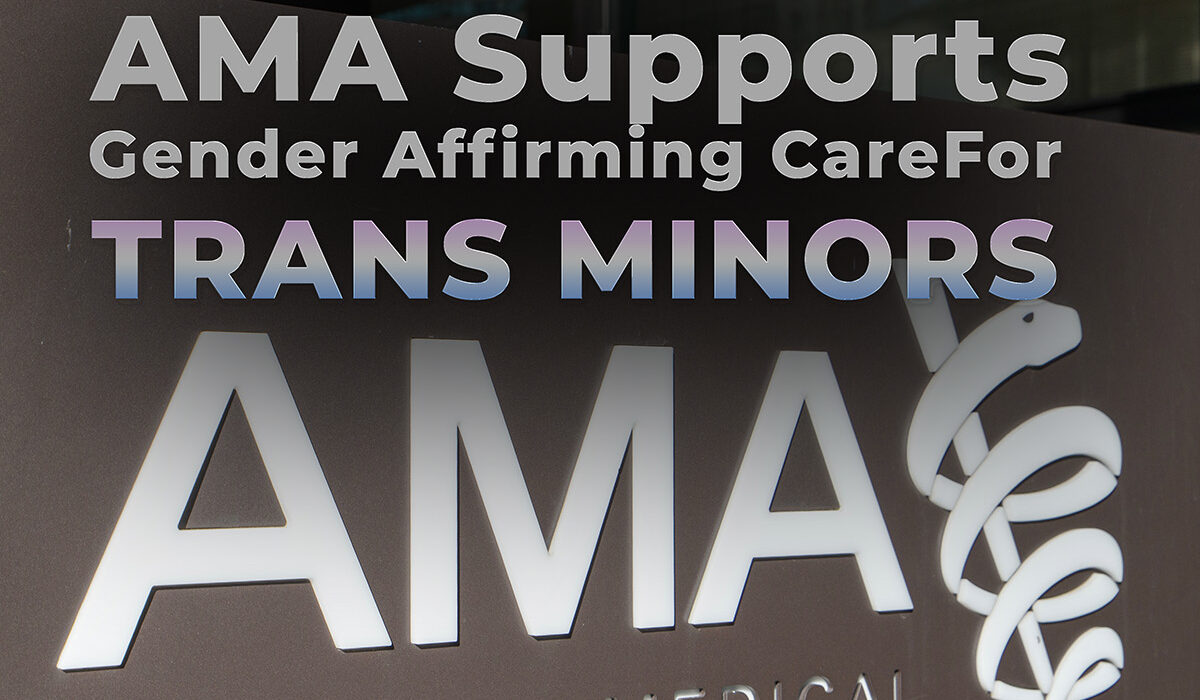
But within days, the American Medical Association (AMA)—the largest physician organization in the United States—moved to clarify what it says was widespread misreporting of its own position.
The result is a sharp reminder of a deeper truth: there is no unified rollback of gender-affirming care among major medical organizations—despite political narratives suggesting otherwise.
What the ASPS Actually Said
On February 3, 2026, ASPS issued a position statement suggesting that gender-affirming procedures for minors—including chest, facial, and genital surgeries—should be postponed until adulthood.
The organization cited what it described as “insufficient evidence” supporting the long-term benefits of such interventions in minors, and emphasized uncertainty around risks and outcomes.
This marked a notable shift, making ASPS one of the first major U.S. medical groups to narrow its guidance on youth gender-affirming surgical care.
Importantly, even ASPS acknowledged that:
- Its statement is not a binding clinical guideline
- It does not support criminalizing care
- And it remains open to revising its stance as evidence evolves
How the Controversy Exploded
In the immediate aftermath, headlines and commentators began claiming that the AMA had “agreed” with ASPS—or even reversed its longstanding support for gender-affirming care.
That narrative spread quickly, amplified by political actors and media outlets already engaged in ongoing debates over trans healthcare.
But according to the AMA, that characterization was wrong.
AMA: “We Did Not Change Our Position”
The AMA issued a clarification pushing back on how its comments were being interpreted.
The organization emphasized that:
More Stories from QueerDispatch
- It continues to recognize gender-affirming care as medically necessary
- It has not reversed its support for trans healthcare
- And reports suggesting otherwise were misrepresentations of its statements
The AMA stated that its comments about surgery for minors were narrow and specific, reflecting ongoing debate about surgical interventions—not a rejection of care overall.
Even in updated statements, the AMA reaffirmed that:
- Care should be evidence-based and individualized
- Decisions should remain between patients, families, and physicians
- And broader access to gender-affirming care must be preserved
The Key Distinction: Surgery vs. Care
At the center of the controversy is a critical distinction that often gets lost in public debate:
Gender-affirming care is not just surgery.
It includes:
- Mental health support
- Social transition
- Puberty blockers
- Hormone therapy
And even among more cautious statements, major medical organizations—including the AMA—continue to support these forms of care as medically appropriate and often lifesaving.
Even where surgical caution is expressed, procedures for minors remain rare in practice.
A Political Undercurrent
The timing of the ASPS statement—and the rapid amplification of confusion around the AMA—comes amid increasing federal pressure on medical organizations.
Recent reporting indicates that federal officials have:
- Praised ASPS’s position
- Pushed for restrictions on gender-affirming care
- And engaged directly with medical groups on the issue
This broader context has led many advocates and clinicians to question whether the controversy is purely scientific—or partially political.
Where the Medical Consensus Still Stands
Despite the headlines, the broader medical landscape has not shifted in the way some narratives suggest.
Major organizations—including:
- The AMA
- The American Academy of Pediatrics
- The Endocrine Society
…continue to support access to gender-affirming care under established clinical guidelines.
What has changed is the visibility of disagreement—particularly around surgical care for minors, a narrower and more complex issue.
Why This Matters
For transgender patients and their families, the stakes are not abstract.
Conflicting headlines can:
- Create fear and confusion
- Undermine trust in healthcare systems
- And be used to justify sweeping legal restrictions
But the AMA’s clarification sends a clear message:
The foundation of gender-affirming care in the United States has not collapsed.
The Bottom Line
The ASPS statement represents a shift within one specialty organization, not a wholesale reversal of medical consensus.
And the AMA—representing hundreds of thousands of physicians—has made its position explicit:
Gender-affirming care remains medically necessary, evidence-based, and a decision best left between patients and their doctors.
In a landscape increasingly shaped by politics, that distinction may be more important than ever.
Follow this blog on Mastodon or the Fediverse to receive updates directly in your feed.

Kirstyn Piper Plummer is a Mom, Wife, Photographer, Reporter, IT Administrator and many other things.




Read More
- Mount Sinai Abandons Its Young Trans Patients, Agrees to End Gender-Affirming Care
- HHS Links Ordinary Transgender Affirmation to Political Violence
- New Mexico Says It Will Use State Money to Keep Gender-Affirming Care Available to Trans Youth
- Appeals Court Upholds Hamtramck’s Pride-Flag Ban, Calling City Flagpoles Government Speech