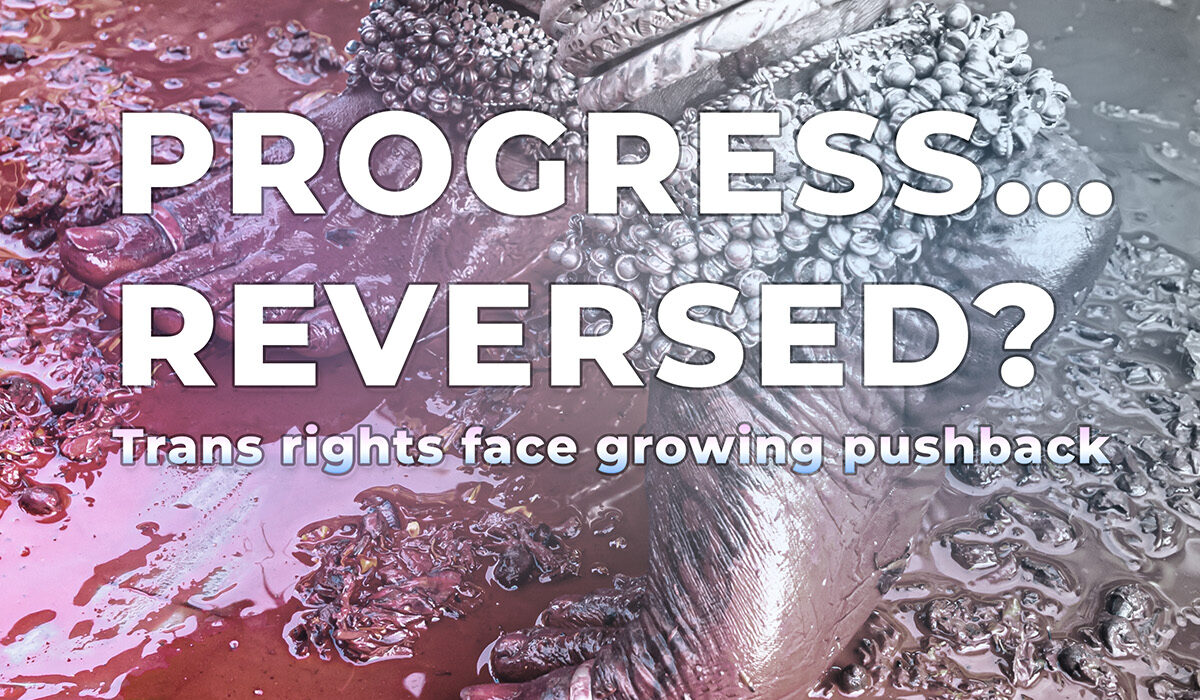
For years, India has been held up as a complicated but hopeful example in the global fight for LGBTQ+ rights.
In 2018, the country’s Supreme Court struck down Section 377, decriminalizing same-sex relationships. In 2014, it recognized a “third gender,” giving legal acknowledgment to trans and nonbinary people. These were not small wins. They were seismic.
But progress, especially when it comes to gender, rarely moves in a straight line.
And right now, India is sliding backwards.
A Shift in Tone—and Policy
In recent months, there’s been a noticeable tightening around gender identity and expression across parts of India. Not always through sweeping national laws—but through a patchwork of smaller, quieter decisions that add up to something much bigger.
Local governments have begun pushing back on gender-affirming policies. Educational spaces are seeing increased pressure to conform to rigid gender norms. And advocacy groups are reporting a rise in bureaucratic resistance when trans individuals attempt to access identity documents, healthcare, or legal protections that were, at least on paper, already secured.
It’s not always headline-grabbing.
But it is real.
And for people living through it, it’s immediate.
Recognition Without Protection
India’s legal recognition of a “third gender” was groundbreaking. It gave millions of people a name, a category, and—at least theoretically—a place within the system.
But recognition without enforcement can become its own kind of illusion.
Trans and nonbinary individuals still face steep barriers to basic services. Legal recognition doesn’t always translate into access to healthcare. It doesn’t guarantee safety in public spaces. And it certainly doesn’t stop discrimination in housing, employment, or education.
More Stories from QueerDispatch
In some cases, it can even make people more visible targets.
One of the clearest shifts is happening around definition. The idea that people can define their own gender is being quietly replaced with systems that require proof—medical, legal, or both. Self-identification is treated less like a right and more like a claim that needs verification. And when identity has to be approved, it stops being yours alone.
Cultural Fault Lines
India’s relationship with gender has always been more complex than a simple Western binary.
Hijra communities, for example, have existed for centuries. They’ve held cultural and spiritual significance long before modern legal frameworks tried to define them.
But modern politics has a way of flattening that complexity.
As nationalist rhetoric continues to rise in parts of the country, there’s been a growing push toward more rigid, traditional definitions of gender and family. What was once seen as part of the cultural fabric is increasingly framed as something “outside” it.
That shift doesn’t just change policy.
It changes how people treat each other.
The Global Pattern
If this all sounds familiar, it should.
We’ve seen similar patterns play out in the United States, the United Kingdom, and across Europe. Gains followed by backlash. Visibility followed by restriction. Recognition followed by attempts to redefine or limit it.
India isn’t an outlier here.
It’s part of a broader global moment where trans rights, in particular, have become a political flashpoint.
And like elsewhere, the people most affected are often the least protected.
What Comes Next
The story of LGBTQ+ rights in India isn’t over. Not even close.
There are still strong advocacy networks. There are still legal frameworks activists can build on. And there are still communities—both within India and globally—paying attention.
But the idea that progress is permanent has always been a myth.
Rights can be won.
They can also be chipped away.
Sometimes quietly. Sometimes all at once.
Right now, in India, it’s happening quietly.
And that makes it easier to miss—until it isn’t.
Final Thought
For those watching from the outside, it’s easy to point to past victories and assume the trajectory is upward.
For those living it, the reality is more complicated.
Progress isn’t just about what’s written in law.
It’s about whether those laws hold when the political winds shift.
And right now, those winds are changing.
Follow this blog on Mastodon or the Fediverse to receive updates directly in your feed.

Kirstyn Piper Plummer is a Mom, Wife, Photographer, Reporter, IT Administrator and many other things.



Read More
- Australia’s High Court Ends Tickle v. Giggle Appeal, Leaving Trans Discrimination Win Intact.
- Appeals Court Upholds Hamtramck’s Pride-Flag Ban, Calling City Flagpoles Government Speech
- Appeals Court Blocks Trump Administration’s ‘Gender Ideology’ Conditions on Local Grants
- New Mexico Says It Will Use State Money to Keep Gender-Affirming Care Available to Trans Youth