CLEVELAND, OH — On a quiet range outside Cleveland, a group of LGBTQ+ people line up, ear protection on, hands steady but not always confident.
For many of them, this is the first time they’ve ever held a firearm.
They’re not here for politics. Not really.
They’re here because they’re scared. And because they’re tired of feeling that way.
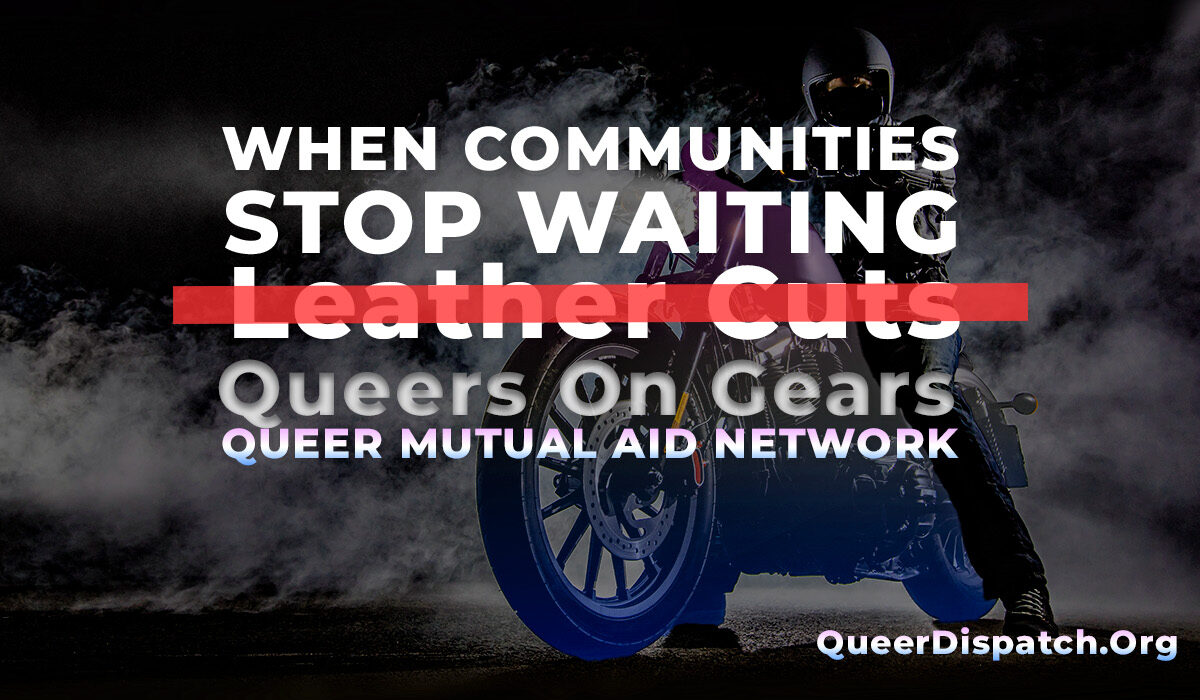
Welcome to Queers on Gears, a Cleveland-area LGBTQ+ motorcycle group that has quietly become something more. What started as a space for queer riders has evolved into a community network offering firearm safety training, peer support, and something harder to define but easy to recognize once you see it: a sense of control in a world that feels increasingly hostile.
“We just wanted a space that wouldn’t turn on us”
Queers on Gears isn’t a militia. It isn’t a political organization in the traditional sense either.
At its core, it’s a group of LGBTQ+ people, many of them trans, who found themselves pushed out of other spaces. Some were longtime riders who lost community after coming out. Others had never touched a motorcycle or a firearm before joining.
What they built instead is something deliberately different.
The training sessions are small. The tone is calm. There’s no shouting, no bravado. People ask questions without getting laughed at. Mistakes are expected.
And that matters.
Because for a lot of queer and trans people, walking into a traditional gun range can feel like walking into enemy territory.
Why this is happening now
You don’t get a group like this without pressure.
More Stories from QueerDispatch
Across Ohio and much of the country, LGBTQ+ people are watching a steady drumbeat of legislation, rhetoric, and policy shifts that signal one thing clearly: you are not a priority, and you may not be safe.
That perception, whether someone agrees with it or not, is driving behavior.
People are changing how they move through the world.
They’re avoiding certain spaces.
They’re watching exits.
They’re thinking about worst-case scenarios.
And for some, they’re deciding that learning how to defend themselves is no longer optional.
When communities stop waiting
This isn’t new. It just feels new.
When I was younger, living in Sacramento, California, our neighborhood went through something similar. A serial killer, known locally as the “thrill killer,” targeted two pizza places just minutes from where I lived.
For a stretch of time, nobody knew where he would strike next.
People were scared. Not in the abstract way we talk about fear now, but in a very real, very immediate way. The kind that changes how you sleep, how you move, how you look at every unfamiliar face.
And something shifted.
The community didn’t just wait for police to fix it.
Members of the Black Panthers and the Hells Angels began patrolling the streets. Not together in any formal sense, but with a shared understanding. People needed to feel protected, and they didn’t believe that protection was coming fast enough.
It wasn’t clean. It wasn’t officially sanctioned. It wasn’t even necessarily safe.
But it was a response to fear and to a perceived gap in protection.
That moment has been stuck in my head ever since.
Because what Queers on Gears is doing now feels like an echo of that same instinct.
The argument for empowerment
Talk to participants and a pattern emerges quickly.
This isn’t about wanting to use a gun.
It’s about not feeling helpless.
For first-time attendees, the shift can be immediate. The moment they understand how a firearm works, how to handle it safely, how to make decisions under pressure, something changes. Shoulders drop. Breathing steadies.
There’s a word that comes up again and again: agency.
Not safety. Not exactly.
Agency.
The idea that if something goes wrong, they won’t be completely at the mercy of it.
For people who have spent years navigating harassment, discrimination, or outright violence, that feeling can be powerful.
The risk no one can ignore
But here’s the part that doesn’t fit neatly into a headline.
More guns do not automatically mean more safety.
That’s not politics. That’s data.
Households with firearms see higher rates of suicide and accidental injury. Escalation is real. A bad situation can become a deadly one faster than anyone expects.
And within LGBTQ+ communities, those risks can be even sharper.
Mental health struggles are already elevated. Crisis moments happen. Introducing a firearm into that equation is not a neutral decision.
Even some supporters of groups like Queers on Gears acknowledge this tension. They talk about responsibility, about training, about knowing when not to act.
Because the truth is, there is no version of this where the risk disappears.
Walking the line
What Queers on Gears is doing sits right on that fault line.
On one side, a community that increasingly feels targeted and under-protected.
On the other, the undeniable reality that firearms carry consequences that can’t be undone.
So they focus on what they can control.
Education.
De-escalation.
Safe handling.
Community accountability.
No one here is pretending this is a perfect solution. It’s not even clear that it’s a solution at all.
It’s a response.
More than guns
It would be easy to reduce Queers on Gears to “the LGBTQ+ gun group.”
That would miss the point.
The firearms training gets attention, but the real impact might be simpler.
People meeting each other.
People showing up.
People realizing they’re not alone.
In a moment where isolation is rising and trust in institutions is falling, that kind of community carries its own kind of protection.
The question we’re not answering yet
Is this empowerment?
Or is it a sign of how far things have already gone?
The answer depends on who you ask. And it may depend on what happens next.
For now, in a quiet range outside Cleveland, a group of people are choosing not to wait for someone else to keep them safe.
Whether that choice makes them safer is still an open question.
But the reason they’re making it is not.
Follow this blog on Mastodon or the Fediverse to receive updates directly in your feed.

Kirstyn Piper Plummer is a Mom, Wife, Photographer, Reporter, IT Administrator and many other things.


Read More
- Australia’s High Court Ends Tickle v. Giggle Appeal, Leaving Trans Discrimination Win Intact.
- Appeals Court Upholds Hamtramck’s Pride-Flag Ban, Calling City Flagpoles Government Speech
- Hungary Moves to Undo Anti-LGBTQ+ ‘Propaganda’ Rules as Turkey Detains 150 Protesters
- Mount Sinai Abandons Its Young Trans Patients, Agrees to End Gender-Affirming Care