Insurance Companies Are Quietly Restricting Gender-Affirming Care — Even in States Where It’s Legal
Piper•
A Quiet Rollback of Trans Healthcare
Across the United States, transgender people are increasingly encountering a new obstacle when trying to access gender-affirming care.
It isn’t always a law.
It isn’t always a court decision.
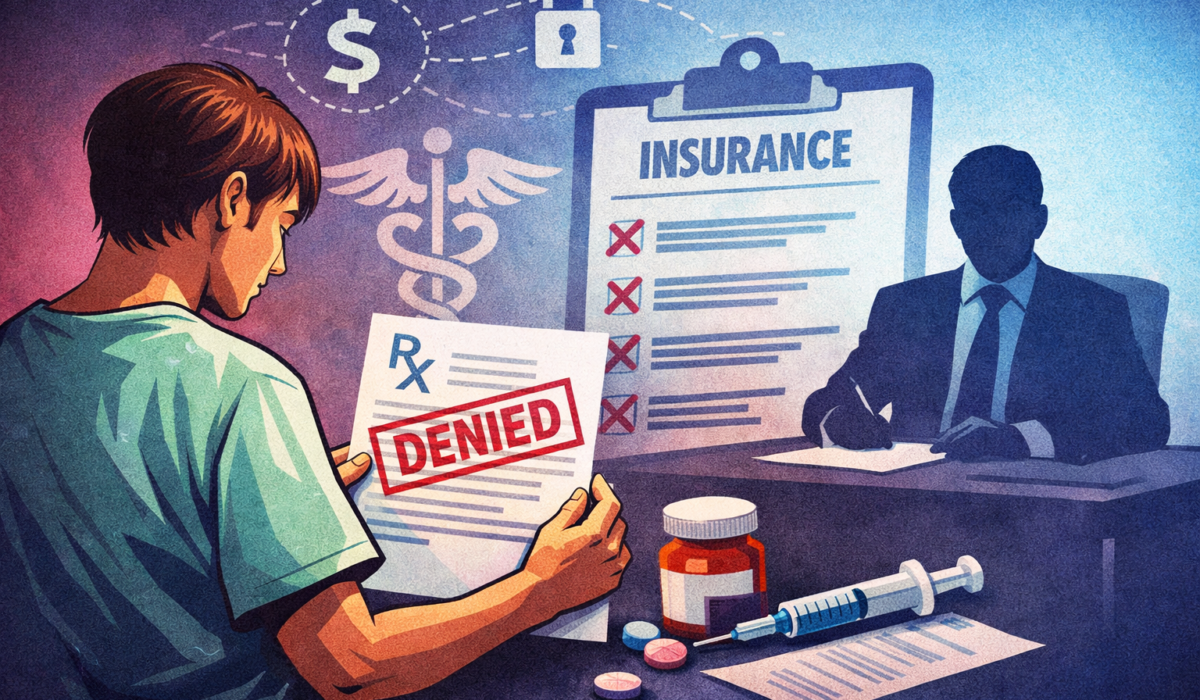
Instead, advocates say the barrier is increasingly coming from insurance companies quietly tightening coverage rules for transition-related healthcare.
Doctors, patients, and policy analysts report a growing pattern of insurance plans adding new administrative hurdles, exclusions, and “medical necessity” requirements that make it harder for transgender patients to access care — even in states where that care remains fully legal.
For many patients, the effect can be the same as a ban.
Advocates say that while legislation receives the most media attention, insurance policies often determine whether patients can actually access gender-affirming care.
When Coverage Exists — But Care Is Still Out of Reach
Gender-affirming care includes a range of medically recognized treatments such as:
hormone therapy
puberty blockers
chest reconstruction surgery
facial feminization surgery
voice therapy and related treatments
Major medical organizations including the American Medical Association, American Academy of Pediatrics, and World Professional Association for Transgender Health recognize gender-affirming care as medically necessary for many patients.
However, even when insurers technically list these treatments as covered benefits, new restrictions can make them difficult or impossible to access.
Advocates say some plans are:
• reclassifying procedures as “cosmetic” rather than medically necessary • requiring multiple psychological evaluations beyond established guidelines • restricting coverage to specific surgeons or limited networks • imposing extended waiting periods for hormone therapy
Kirstyn Piper Plummer is a Mom, Wife, Photographer, Reporter, IT Administrator and many other things.
210 posts
3 followers
Follow Piper
My Profile
Paste my profile into the search field of your favorite open social app or platform.
Your Profile
Or, if you know your own profile, we can start things that way! Why do I need to enter my profile?
This site is part of the ⁂ open social web, a network of interconnected social platforms (like Mastodon, Pixelfed, Friendica, and others). Unlike centralized social media, your account lives on a platform of your choice, and you can interact with people across different platforms.
By entering your profile, we can send you to your account where you can complete this action.





[…] ➡ Insurance Companies Quietly Restrict Gender-Affirming Care […]
[…] RELATED: Insurance Companies Are Quietly Restricting Gender-Affirming Care — Even in States Where It’s Le… […]
[…] RELATED: [Insurance Companies Are Quietly Restricting Gender-Affirming Care] […]
[…] insurance coverage policies […]
[…] RELATED: Insurance Companies Are Quietly Restricting Gender-Affirming Care — Even in States Where It’s Le… […]