
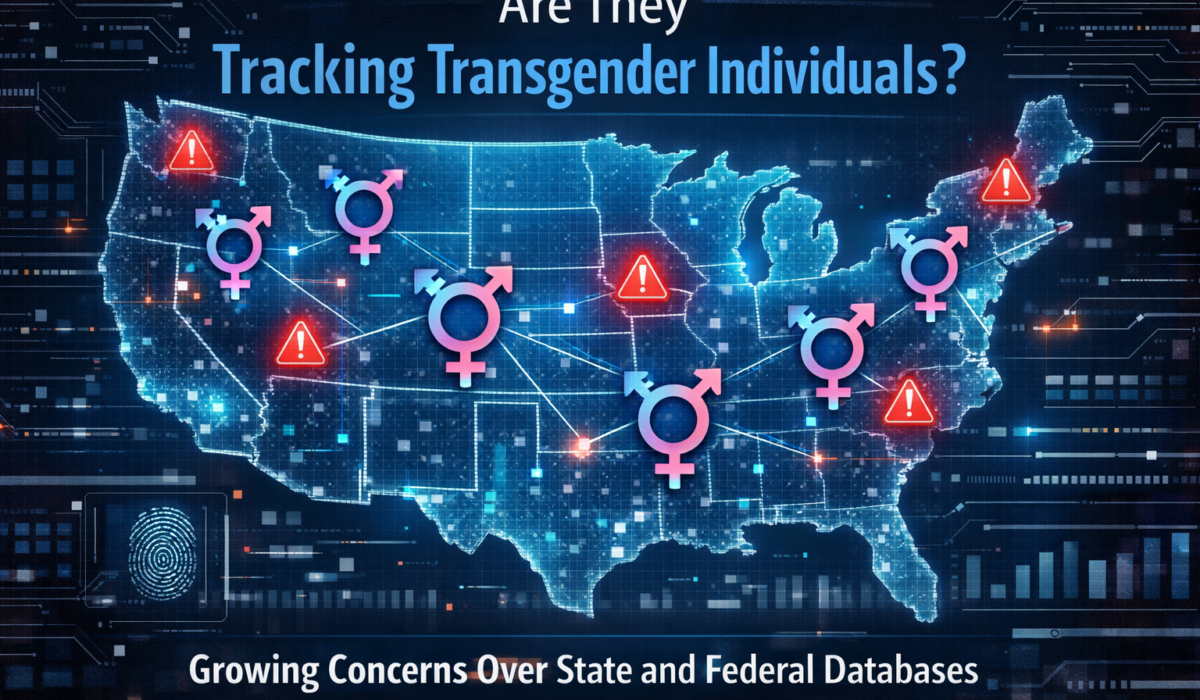
🚨 No “Registry” — But Something Is Being Built
There is no confirmed national registry of transgender people in the United States.
There is no verified program where states are handing lists of trans residents to the federal government.
But across multiple states — and within federal agencies — something more subtle is happening:
The systems that could enable tracking already exist, and they are expanding.
From ID rollbacks to medical data requests, the question is no longer “Is there a registry?”
It’s now:
“How easily could one be created?”
🪪 State ID Laws Are Forcing Identification
In states like Kansas, new policies require that driver’s licenses and state IDs reflect sex assigned at birth, even if they were previously updated.
That means:
- States must identify which residents are transgender
- They must locate and alter those records
- They must maintain internal consistency across databases
This isn’t labeled as “tracking.”
But in practice, it requires building a dataset of people whose gender identity differs from their assigned sex.
📌 You cannot reverse a record unless you know who to target.
🏥 The Federal Government Has Already Tried to Access Trans Data
In one of the most alarming developments, the U.S. Department of Justice recently sought medical records of thousands of transgender minors from a California hospital.
The request triggered legal challenges over privacy and patient protection.
Under pressure, officials ultimately backed away from seeking personally identifiable information.
But the attempt itself is significant.
More Stories from QueerDispatch
⚠️ This was not hypothetical — it was a direct effort to access a large dataset of trans individuals.
🧾 A Parallel Shift: Data Is Also Disappearing
At the same time, federal agencies have been:
- Removing gender identity data from public datasets
- Limiting how LGBTQ+ demographics are tracked in research
- Reducing visibility into discrimination reporting systems
This creates a dangerous imbalance:
- States may hold more detailed identity data
- The public has less access to transparency tools
📉 Less oversight. More centralized control.
🚔 Immigration Policy Raises New Fears
Recent immigration policy changes have sparked concern among advocates that gender marker discrepancies could be used in enforcement actions.
While there is no confirmed directive targeting transgender individuals, the concern is grounded in how data systems function:
- Passport data
- Visa records
- State identification databases
If those systems conflict, they can trigger flags.
⚠️ And flags can lead to scrutiny.
🧠 The Bigger Picture: Infrastructure Without a Name
None of these policies say:
“We are building a registry.”
But together, they create:
- Systems that identify transgender individuals
- Databases that store and categorize identity information
- Legal pathways where that data can be requested or subpoenaed
This is what experts call infrastructure risk.
🧩 You don’t need a registry if the pieces already connect.
🗣️ Why Advocates Are Sounding the Alarm
Civil liberties groups are increasingly warning that:
- Data collected for administrative purposes can be repurposed
- Privacy protections vary dramatically by state
- Federal access to state systems is often legally contested—but possible
Some states, including those in the Northeast, are already exploring:
- Data minimization policies
- Restrictions on out-of-state data sharing
- Legal shields against federal overreach
🔥 The Reality Right Now
Let’s be clear:
❌ There is no confirmed national transgender registry
❌ There is no verified mass data transfer from states to federal agencies
But also:
⚠️ States are being required to identify transgender residents
⚠️ Federal agencies have attempted to access trans-related data
⚠️ The technical and legal infrastructure is rapidly evolving
📣 The Question That Matters
This isn’t just about what exists today.
It’s about what becomes possible tomorrow.
If a registry were ordered — how much of it would already be built?
🏳️⚧️ For the Trans Community, This Isn’t Abstract
For many transgender people, this isn’t a policy debate.
It’s a question of safety.
- Who has your data?
- How is it categorized?
- And what happens if that data is shared?
Because history has shown:
Systems built quietly can be used loudly.
✊ Call to Action
- Pay attention to state-level data laws
- Support organizations fighting for privacy protections
- Demand transparency in how identity data is collected and used
- Join QueerDispatch!
Follow this blog on Mastodon or the Fediverse to receive updates directly in your feed.

Kirstyn Piper Plummer is a Mom, Wife, Photographer, Reporter, IT Administrator and many other things.




Read More
- Hungary Moves to Undo Anti-LGBTQ+ ‘Propaganda’ Rules as Turkey Detains 150 Protesters
- Appeals Court Blocks Trump Administration’s ‘Gender Ideology’ Conditions on Local Grants
- New Mexico Says It Will Use State Money to Keep Gender-Affirming Care Available to Trans Youth
- HHS Links Ordinary Transgender Affirmation to Political Violence