There is a dangerous myth at the center of modern surveillance:
That harm only happens when governments create lists.
But in 2026, they don’t need one; the lists create themselves.
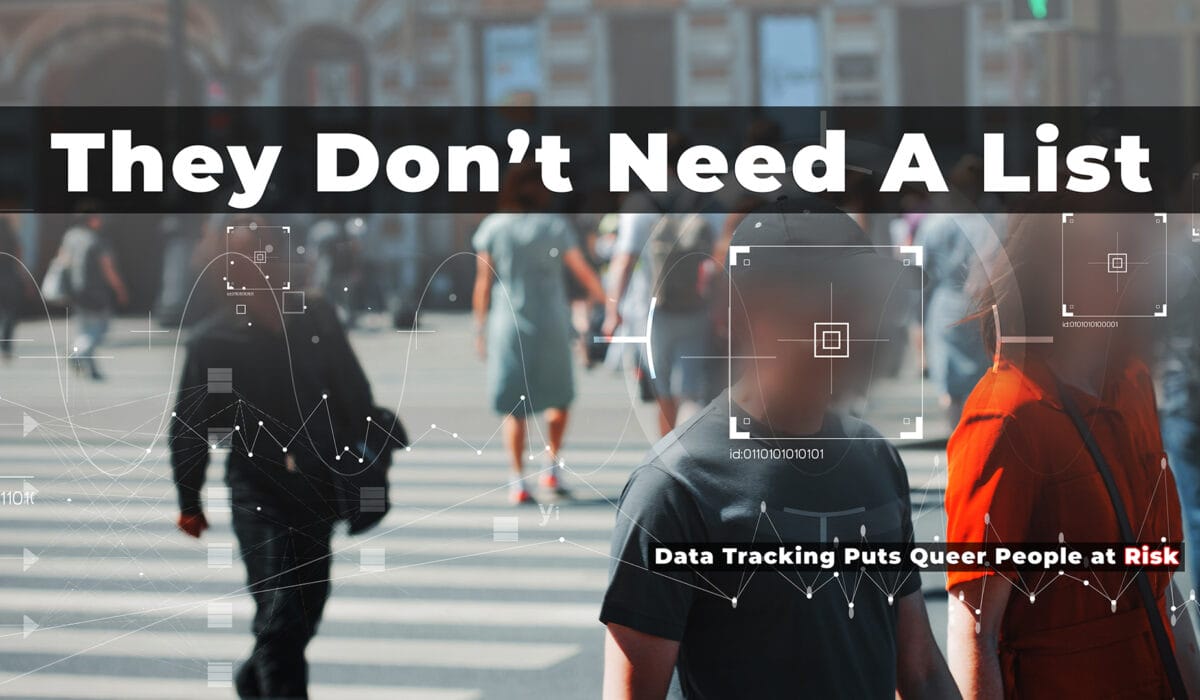
Across the United States, a rapidly expanding web of surveillance tools, including license plate readers, predictive analytics platforms, and mass data aggregation systems, is quietly building something else entirely: pattern-based identity tracking.
And LGBTQ+ people are uniquely vulnerable.
🚨 The Infrastructure Is Already Built
Companies like Palantir Technologies and Flock Safety are at the center of a growing surveillance ecosystem used by law enforcement and federal agencies.
These tools don’t just collect data; they connect it.
- License plate readers track where vehicles go, often storing months or years of data
- Data analytics platforms ingest information from multiple sources
- Agencies share information across jurisdictions
Individually, each system might seem limited.
Together, they create something far more powerful.
And far more dangerous.
🧠 How “Pattern Recognition” Becomes Identity Tracking
No one needs to label someone as LGBTQ+ in a database.
Instead, systems can infer identity through behavior:
- Repeated visits to LGBTQ+ community centers or clinics
- Attendance at Pride events
- Travel patterns to affirming healthcare providers
- Social network overlaps with known LGBTQ+ individuals
Over time, algorithms can flag patterns.
More Stories from QueerDispatch
And patterns can become profiles.
“You don’t need a list when you can build one from behavior.”
This is the quiet shift, from surveillance of actions to surveillance of identity.
⚠️ Why This Matters Right Now
This technology doesn’t exist in a vacuum.
It’s emerging alongside:
- Increasing anti-LGBTQ+ legislation
- State-level restrictions on gender-affirming care
- Expanding immigration enforcement coordination
That combination creates a chilling possibility:
That tools originally marketed for “public safety” could be used to monitor, target, or deter LGBTQ+ people.
Even if unintentionally at first.
🔓 Security Risks Make It Worse
There’s another layer of concern: access control.
Investigations and public reporting have shown that some surveillance systems, particularly license plate databases, have had:
- Weak safeguards
- Improper access controls
- Instances of unauthorized use
That raises the risk that:
- Individuals outside law enforcement
- Bad actors within agencies
- Or even politically motivated groups
could access or misuse sensitive data.
🧭 The Chilling Effect Is Already Here
You don’t need direct targeting for harm to occur.
The perception of surveillance is enough.
- People avoid clinics
- Skip community events
- Think twice about travel
- Disconnect from support networks
This is how surveillance suppresses communities; quietly, gradually, and often invisibly.
🧩 The Bottom Line
No law has been passed requiring a registry of LGBTQ+ people.
No official database exists.
But that doesn’t mean tracking isn’t happening.
Because in 2026, identity doesn’t need to be declared.
It can be inferred.
And that may be even more dangerous.
Follow this blog on Mastodon or the Fediverse to receive updates directly in your feed.

Kirstyn Piper Plummer is a Mom, Wife, Photographer, Reporter, IT Administrator and many other things.



Read More
- Appeals Court Blocks Trump Administration’s ‘Gender Ideology’ Conditions on Local Grants
- Court Rejects Anti-Trans Activist’s Appeal After False Claims About Trans Soccer Player
- New Jersey Bill Would Make Blocking Reproductive or Gender-Affirming Healthcare a Crime
- Hungary Moves to Undo Anti-LGBTQ+ ‘Propaganda’ Rules as Turkey Detains 150 Protesters