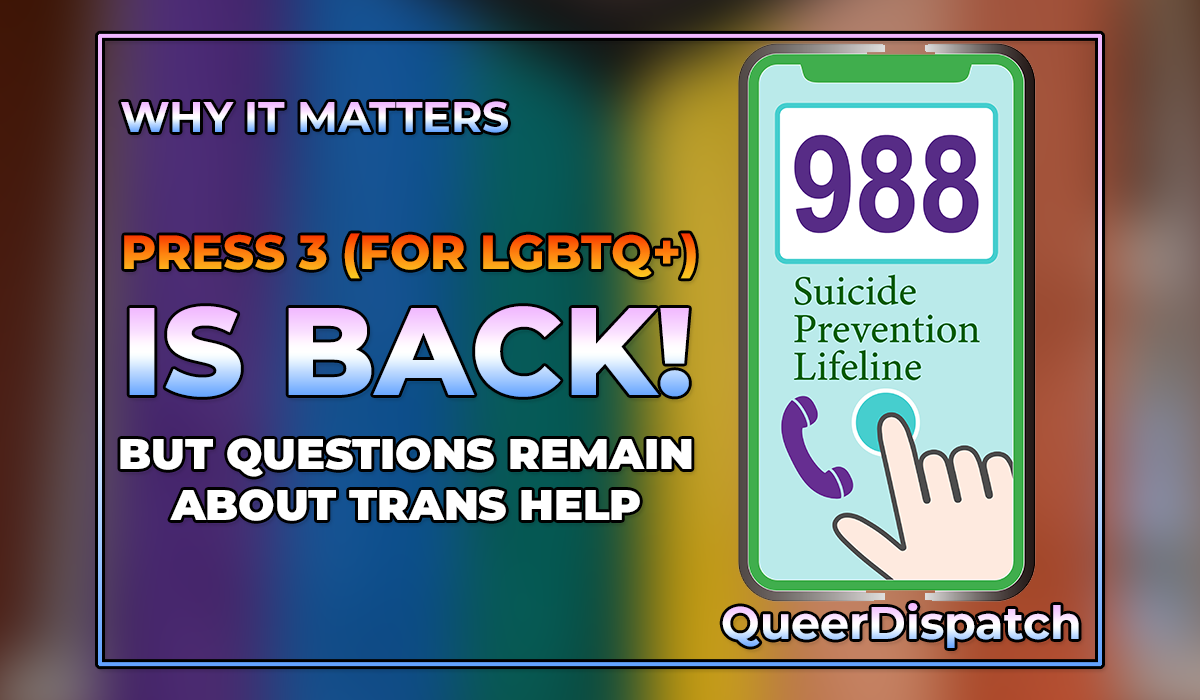
More than a year after the Trump administration eliminated specialized LGBTQ+ youth crisis services from the 988 Suicide & Crisis Lifeline, “Press 3” is back. But the restored program is not simply the old service being switched back on — and the federal government has left important questions unanswered about what transgender and nonbinary young people can expect when they reach out for help.
LGBTQ+ young people can once again press 3 when calling 988 to reach specialized crisis support.
The dedicated LGBTQ+ youth service returned September 30, ending a 14-month period in which young people who previously would have been routed to counselors trained specifically to address LGBTQ+ crises instead had to use the general 988 network.
Congress ordered the Department of Health and Human Services to restore the service after the Trump administration shut it down in July 2025.
That makes the return of Press 3 significant.
But it does not mean the original program has simply returned.
The Trevor Project, which helped launch the original specialized service and at one point handled roughly half of its contacts, is not part of the restored network.
And there is another question that may matter even more to transgender young people:
Will the counselors answering those calls be allowed to affirm who they are?
When The Advocate asked HHS whether counselors could recognize transgender and nonbinary identities and use a caller’s chosen name and pronouns, the department did not directly answer.
Instead, HHS pointed to the Trump administration’s policies concerning what it calls “gender ideology” and federal recognition of sex.
For a crisis service specifically intended to serve LGBTQ+ youth, that is not a minor unanswered detail.
More Stories from QueerDispatch
What happened to 988’s LGBTQ+ service?
The specialized LGBTQ+ service began as a pilot program in 2022.
Young people contacting the 988 Suicide & Crisis Lifeline could select a dedicated option connecting them with counselors specifically trained to work with LGBTQ+ youth experiencing suicidal thoughts, emotional distress or another mental-health crisis.
The program eventually grew into a network of crisis centers, with The Trevor Project playing a major role in its creation and operation.
And young people used it.
Before the program was eliminated, it had handled approximately 1.6 million calls, texts and chats, according to figures cited by The Advocate from the Government Accountability Office.
By its final full month of operation, the specialized service was receiving nearly 70,000 contacts per month.
Then the federal government shut it down.
The Trump administration eliminated Press 3 in 2025
In June 2025, the Substance Abuse and Mental Health Services Administration announced that specialized LGBTQ+ youth services would end the following month.
The change took effect July 17.
In its announcement, SAMHSA said the administration would no longer “silo LGB+ youth services” and argued that callers could continue receiving assistance through the general 988 system.
The language itself drew attention.
The federal announcement referred to “LGB+” youth, removing the “T” that explicitly included transgender people in descriptions of the population the service had been created to help.
The 988 Lifeline itself never disappeared. Anyone could still call or text 988.
What disappeared was the dedicated route connecting LGBTQ+ young people with specialized crisis counselors.
That distinction matters.
There is a difference between having someone answer the phone and knowing that the person answering has been trained to understand why rejection after coming out, being intentionally misgendered, being forced back into the closet, losing access to gender-affirming care, or living in an unsafe home can become a crisis for an LGBTQ+ young person.
Congress forced the service’s return
The shutdown did not become permanent.
Congress eventually required HHS and SAMHSA to restore specialized LGBTQ+ youth crisis services.
The funding legislation directed $33.1 million toward the program, according to The Advocate, and lawmakers including Sen. Tammy Baldwin pushed the administration to implement the requirement.
On September 30, Baldwin announced that the specialized Press 3 service was operating again.
That is an important reversal.
LGBTQ+ young people once again have a dedicated pathway within the country’s national suicide and crisis hotline.
But the system they reach on the other side of that pathway has changed.
The Trevor Project isn’t part of the new Press 3
Perhaps the most visible difference is the absence of The Trevor Project.
The LGBTQ+ crisis organization helped launch the original federal pilot and eventually handled roughly half of the contacts coming through the specialized network.
When the federal government rebuilt Press 3, however, eligibility was limited to organizations already participating in the 988 network.
The Trevor Project was no longer part of that network after the government terminated the specialized service it had helped operate.
The organization submitted a proposal anyway.
It was rejected.
The Trevor Project has nevertheless welcomed the restoration.
“We are grateful to see that the 988 Suicide & Crisis Lifeline’s ‘Press 3’ specialized services for LGBTQ+ youth have been restored,” CEO Jaymes Black said in a September 30 statement.
The organization said it intends to monitor the restored service and advocate for LGBTQ+ young people to receive care consistent with clinical best practices.
That oversight may prove particularly important for transgender and nonbinary callers.
What happens when transgender kids press 3?
This is where the story becomes considerably less clear.
The federal government has restored a crisis service specifically for LGBTQ+ young people while simultaneously maintaining policies that reject federal recognition of transgender identities beyond sex as defined by the administration.
That creates an obvious question:
What happens when a teen that identifies as transgender teenager calls?
The Advocate asked HHS whether counselors working within the restored Press 3 program would be permitted to recognize transgender and nonbinary identities and use callers’ chosen names and pronouns.
HHS did not provide a direct answer.
Instead, a department spokesperson said the agency remains aligned with President Donald Trump’s executive orders addressing what the administration calls “gender ideology.”
The department also did not provide the requested counselor training materials or fully identify the organizations providing the restored specialized service.
That leaves LGBTQ+ families and advocates without answers to some basic questions about how the program actually works.
Can a counselor affirm a transgender girl’s identity while helping her through a suicidal crisis?
Can they use the name and pronouns a young person asks them to use?
Are counselors trained to recognize crises caused or worsened by gender dysphoria, family rejection, bullying or the loss of gender-affirming medical care?
What instructions have counselors received when a young person’s LGBTQ+ identity itself is central to the crisis?
Those questions should not be difficult for HHS to answer.
Specialized crisis care matters
LGBTQ+ young people experience dramatically higher rates of suicidal thoughts and suicide attempts than their peers.
The Trevor Project estimates that more than 1.8 million LGBTQ+ young people in the United States seriously consider suicide each year and that LGBTQ+ youth are more than four times as likely to attempt suicide as their peers.
That disparity does not mean LGBTQ+ identities cause suicide.
Research has repeatedly connected increased risk among LGBTQ+ young people with experiences including discrimination, rejection, bullying, victimization and stigma.
That distinction is especially important when discussing transgender youth.
Being transgender is not itself a crisis.
Being rejected by your family can be.
Being bullied at school can be.
Being afraid to tell someone who you are can be.
Having healthcare suddenly taken away can be.
And believing that even the person answering a suicide hotline might reject your identity can create another barrier between a young person in crisis and the help they need.
That is why specialized support matters.
Press 3 is back. Now HHS needs to explain what that means.
Restoring Press 3 is meaningful.
For 14 months, LGBTQ+ young people lost a dedicated federal crisis service that had handled more than a million contacts and had become an important part of the country’s mental-health safety net.
Congress required its restoration.
Lawmakers from both parties supported bringing it back.
LGBTQ+ organizations continued demanding that specialized crisis support be restored.
And on September 30, it finally was.
That deserves recognition.
But restoring the button is not the same thing as restoring the service.
The real test comes after a frightened young person presses 3.
Who answers?
What training did they receive?
What are they allowed to say?
And can a transgender or nonbinary kid trust that the person on the other end of the line will respect who they are while helping them survive the moment that made them call?
Until HHS answers those questions clearly, the return of Press 3 should be viewed as both an important restoration and an unfinished one.
LGBTQ+ youth once again have a dedicated door they can open.
Now the federal government needs to tell them what is waiting on the other side.
If you need help
988 Suicide & Crisis Lifeline: Call or text 988. LGBTQ+ young people can access specialized services through Press 3.
The Trevor Project: LGBTQ+ young people can call 1-866-488-7386, text START to 678678, or access crisis support through The Trevor Project’s website.
Trans Lifeline: Transgender and questioning people can call 877-565-8860 in the United States for peer support.
TransPulse: Transgender and gender-diverse people looking for community support can access TransPulse’s forums and live chat. Its chat is moderated by volunteers trained in suicide prevention and includes access to crisis moderators. TransPulse is a support community rather than a replacement for emergency services.
Read More
- Hungary Moves to Undo Anti-LGBTQ+ ‘Propaganda’ Rules as Turkey Detains 150 Protesters
- Australia’s High Court Ends Tickle v. Giggle Appeal, Leaving Trans Discrimination Win Intact.
- Ninth Circuit Rejects Demand That Schools Identify Transgender Athletes
- Trump Administration Investigates Massachusetts School Over Trans Student — But Key Facts Are Disputed