A newly introduced bill in Australia is reigniting the global fight over transgender rights, sex discrimination law, and who gets protected under equality legislation.
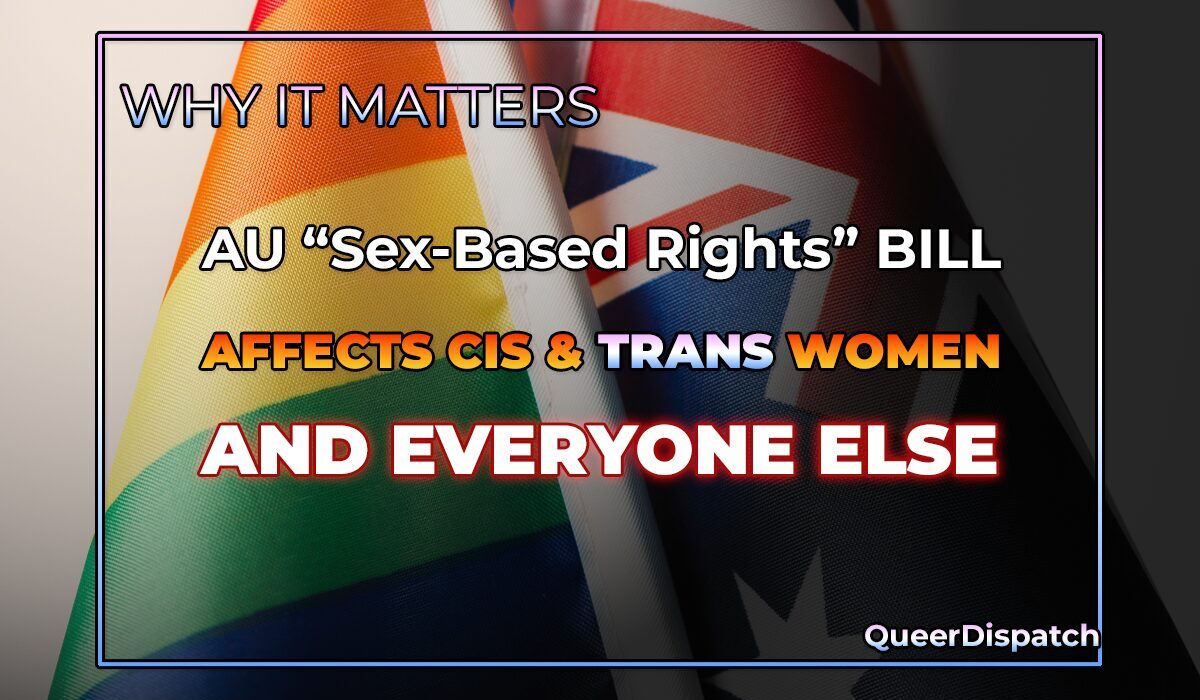
The proposed Sex Discrimination Amendment (Sex-based Rights) Bill 2026, introduced by MP Alison Penfold, would redefine legal protections under Australia’s Sex Discrimination Act around “biological sex” rather than gender identity. Supporters frame it as a way to restore “women’s rights” and protect single-sex spaces. Critics say it is something very different: a sweeping rollback of anti-discrimination protections that could hurt transgender people while weakening protections for women more broadly.
According to advocacy group Equality Australia, the legislation is “legally messy, socially divisive and risks weakening protections for all women.” The organization argues the bill could create loopholes allowing sexism and discriminatory treatment to be reframed as “sex-based rights.”
The proposal arrives after several high-profile legal battles in Australia involving transgender women and the interpretation of anti-discrimination law. Most notably, the recent Giggle v Tickle appeals case reaffirmed that transgender women are protected under Australia’s Sex Discrimination Act. The Federal Court upheld findings that a transgender woman had been unlawfully discriminated against after being excluded from a women-only networking app.
That ruling triggered immediate backlash from conservative politicians and activists who claimed Australia’s laws had become too expansive in recognizing gender identity protections. Opposition leader Angus Taylor publicly pledged to amend the Sex Discrimination Act to explicitly define sex based on biology if elected.
The new Penfold bill appears to be part of that broader push.
Critics warn the consequences could extend far beyond trans Australians.
Legal advocates argue that once lawmakers begin carving exceptions into discrimination law based on narrow definitions of sex, it can create ripple effects across employment protections, harassment claims, pregnancy discrimination cases, and access to public accommodations. Equality Australia says the bill risks creating confusion and legal uncertainty across the entire framework of sex discrimination protections.
Australia’s federal protections for gender identity have existed since 2013, when amendments added explicit protections for sexual orientation, gender identity, and intersex status under the Sex Discrimination Act.
Since then, transgender rights in Australia have increasingly become a political flashpoint, particularly around women-only spaces, public accommodations, and association rights. Recent cases involving the Lesbian Action Group and other exclusionary campaigns have intensified those tensions.
Supporters of the new bill claim they are restoring clarity and protecting women’s spaces. Opponents say the rhetoric mirrors anti-trans campaigns seen in the United States and United Kingdom, where “biological reality” legislation has often been followed by broader restrictions on healthcare, public participation, and legal recognition for transgender people.
For many LGBTQ+ advocates, the concern is not just the wording of one bill. It is the larger strategy.
More Stories from QueerDispatch
Across multiple countries, transgender rights debates are increasingly being framed as conflicts between trans people and women — despite many feminist organizations, legal scholars, and human rights advocates arguing the protections are not mutually exclusive.
And now Australia appears poised to become the latest front in that global fight.
Read More
- Australia’s High Court Ends Tickle v. Giggle Appeal, Leaving Trans Discrimination Win Intact.
- Hungary Moves to Undo Anti-LGBTQ+ ‘Propaganda’ Rules as Turkey Detains 150 Protesters
- Saddle Lake Cree Nation Turns Treaty Rights Into a Shield for Trans Lives
- New Mexico Says It Will Use State Money to Keep Gender-Affirming Care Available to Trans Youth