
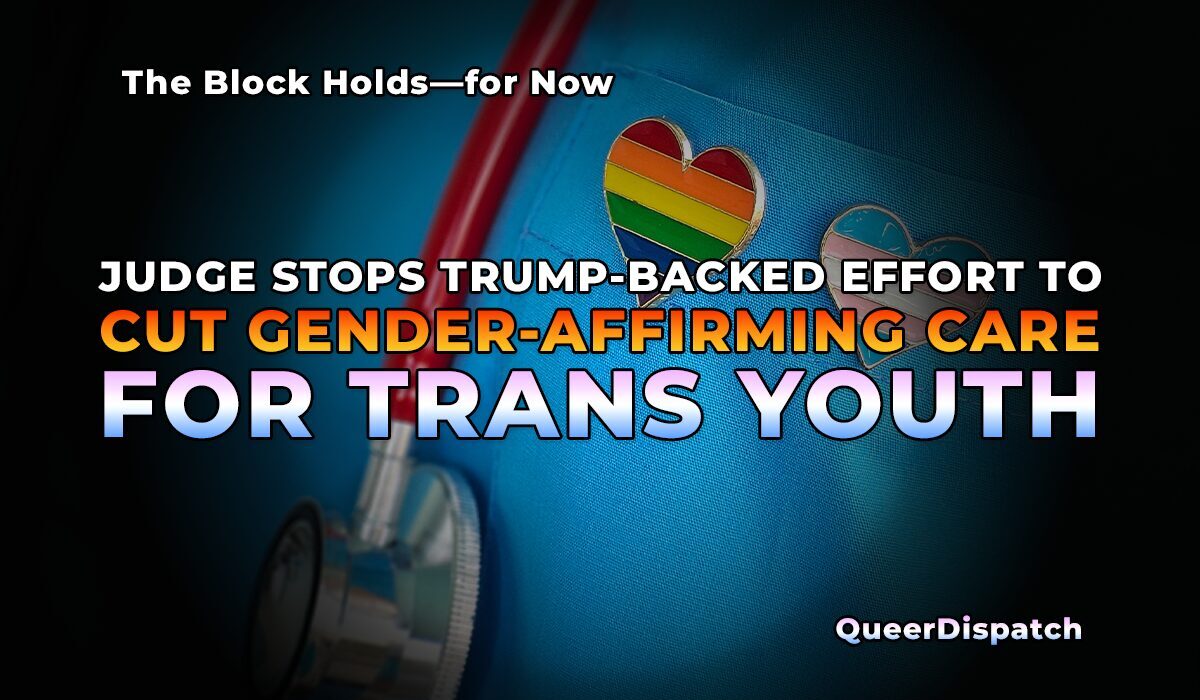
A Maryland federal court ruling preserves access to gender-affirming care for youth under 19—at least for now—while a broader legal battle continues.
The Block Holds—for Now
A federal judge has refused to lift a nationwide block on key parts of Donald Trump’s administration-backed effort to restrict gender-affirming care for minors, delivering a temporary but significant victory for transgender youth, their families, and healthcare providers.
In a ruling from the U.S. District Court for Maryland, Judge Brendan A. Hurson denied a request that would have allowed federal officials to move forward with policies tying funding to whether providers offer gender-affirming care.
That means—at least for now—doctors and clinics can continue providing care without fear of losing federal support.
What Was at Stake
The administration’s push centered on restricting access to care by:
- Conditioning federal funding for healthcare providers
- Targeting treatments for patients under 19
- Framing gender-affirming care as “gender ideology”
If allowed to proceed, the policy could have forced hospitals and providers into an impossible choice:
deny care—or risk losing funding.
The Lawsuit Behind the Block
The injunction currently in place stems from a March 2025 legal challenge brought by:
- PFLAG
- Families of transgender youth
- Medical organizations
Their argument is straightforward:
These policies are not just administrative—they are life-altering interventions into established medical care.
The court agreed enough to maintain the injunction while the case moves through appeals.
Why This Matters
This ruling does not end the fight—but it stops immediate harm.
Gender-affirming care for minors is supported by major medical organizations and includes:
More Stories from QueerDispatch
- Mental health support
- Puberty blockers
- Hormone therapy (in some cases)
Blocking access doesn’t eliminate need—it increases risk.
Research consistently shows that access to gender-affirming care is linked to lower rates of depression, anxiety, and suicide among transgender youth.
The Bigger Pattern
This case fits into a broader national trend:
- Executive actions targeting trans healthcare
- State-level bans and restrictions
- Efforts to redefine care as ideological rather than medical
What’s happening here isn’t isolated—it’s part of a coordinated push to reshape healthcare access through policy pressure rather than medical consensus.
What Comes Next
The injunction remains in place—but only temporarily.
The case is now moving through the appeals process, meaning:
- The policy could still be revived
- The legal fight will likely escalate
- A higher court decision could reshape access nationwide
For now, though, the ruling sends a clear signal:
Courts are not automatically accepting political interference in medical care.
The Bottom Line
This decision doesn’t resolve the issue—but it buys time.
Time for families.
Time for providers.
Time for transgender youth who would otherwise be caught in the crossfire of policy.
And in a landscape where access is increasingly fragile, time matters
Follow this blog on Mastodon or the Fediverse to receive updates directly in your feed.

Kirstyn Piper Plummer is a Mom, Wife, Photographer, Reporter, IT Administrator and many other things.



Read More
- New Jersey Is Back in the Fight, Challenging Trump Medicaid Ban on Trans-Youth Care
- Mount Sinai Abandons Its Young Trans Patients, Agrees to End Gender-Affirming Care
- DOJ Forces Third Children’s Hospital to End Trans Youth Care as Federal Pressure Campaign Expands
- New Mexico Says It Will Use State Money to Keep Gender-Affirming Care Available to Trans Youth