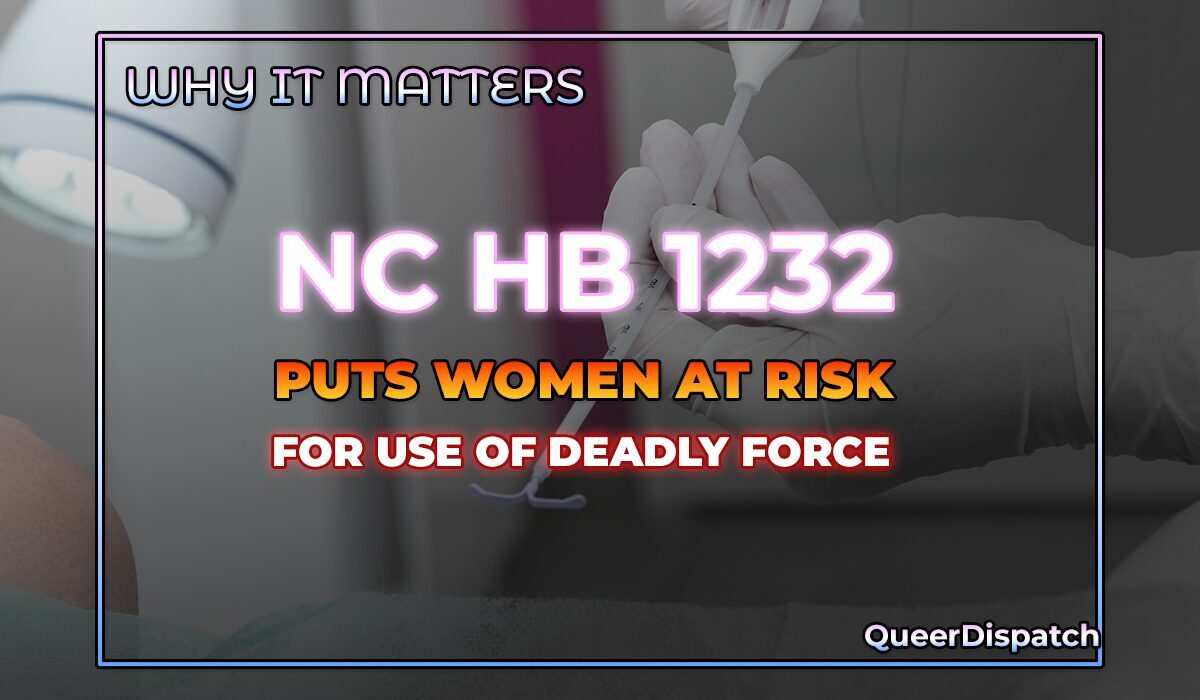
North Carolina Republicans have introduced House Bill 1232, a proposal that would amend the state constitution to declare that human life begins at fertilization. On its face, supporters describe the bill as a “personhood” measure. In practice, critics argue it could dramatically expand criminal penalties related to abortion, threaten access to some forms of contraception, create legal uncertainty around IVF, and potentially authorize the use of deadly force in situations involving abortion.
The bill, sponsored by Republican Rep. Keith Kidwell, would place a constitutional amendment before voters declaring that a “distinct and separate human life begins at the moment of fertilization” and is entitled to legal protection from that point forward.
But the language surrounding enforcement has sparked outrage far beyond North Carolina.
According to reporting on the bill, HB 1232 would classify abortion as attempted murder or first-degree murder and contains language asserting that individuals have the right to defend their own life or the life of another person, including through deadly force if necessary. Critics warn that once fertilized eggs are granted full legal personhood, the measure could be interpreted to justify violence against abortion providers or even against people seeking abortions.
Medical professionals and reproductive rights advocates have also raised concerns about what the bill could mean for fertility treatments and birth control. Because the proposal treats a fertilized egg as a legally protected person, opponents argue it could place IVF procedures and certain contraceptive methods under legal scrutiny.
The backlash has been so intense that one Republican lawmaker reportedly withdrew support after the bill drew widespread criticism online. A viral response from healthcare workers and reproductive rights advocates accused the legislation of opening the door to criminalizing women, healthcare providers, and even some forms of family planning.
For many LGBTQ+ North Carolinians, the proposal feels familiar.
North Carolina has a long history of becoming a testing ground for controversial culture-war legislation. The state’s infamous HB2 “bathroom bill” generated national outrage, lawsuits, corporate boycotts, and years of damage to the state’s reputation before ultimately being repealed. More recently, lawmakers have enacted restrictions targeting transgender youth, transgender athletes, and gender-affirming healthcare.
HB 1232 follows the same pattern: an ideologically driven proposal framed as protecting vulnerable people while critics argue it would instead expand government control over deeply personal medical decisions.
Even some political observers note that similar proposals have historically struggled to advance through the legislature, often being referred to committee and quietly dying there. Still, the filing of the bill is significant because it demonstrates how far some lawmakers are willing to push the legal definition of personhood and criminal liability.
The debate surrounding HB 1232 is ultimately about more than abortion. It is about whether fertilized eggs should be granted the same legal status as living, breathing people—and what happens when that legal fiction collides with modern healthcare, contraception, fertility treatment, and bodily autonomy.
North Carolina has been down this road before. The question now is whether lawmakers will once again force the state into the center of a national culture war, or whether voters and legislators will decide that some ideas are simply too extreme to become law.
More Stories from QueerDispatch
Read More
- New Jersey Bill Would Make Blocking Reproductive or Gender-Affirming Healthcare a Crime
- Court Rejects Anti-Trans Activist’s Appeal After False Claims About Trans Soccer Player
- Saddle Lake Cree Nation Turns Treaty Rights Into a Shield for Trans Lives
- Appeals Court Blocks Trump Administration’s ‘Gender Ideology’ Conditions on Local Grants