I was lying in bed this morning, reading a book.
The sun was doing most of the work. The TV was in that passive-aggressive “are you still watching this?” mode. Everything felt normal. Quiet.
Then my son walked in and said, “Did you hear the boom?”
I hadn’t.
In fact, I hadn’t even noticed the power was out.
That’s how soft the moment was. That’s how easy it was to miss.
Until it wasn’t.
I’m a trans woman. Openly so. In my neighborhood, I don’t hide.
Could I “pass” if I tried? Sure. Some days. If I put in the effort. If I played the game.
Most days, I don’t.
You’re more likely to see me in leggings and a T-shirt than anything else. Maybe a hoodie if it’s cold. Sometimes not even a bra. Just… existing. Living.
And in 2026, just existing like that is supposed to be dangerous.
More Stories from QueerDispatch
That’s what we’re told.
That’s what the headlines say.
That’s what the laws being proposed, passed, and enforced are built on—the idea that people like me are a problem, a threat, something to be controlled.
So when the power goes out, and there’s a “boom,” there’s always that split-second thought:
Is this one of those moments?
I went downstairs. Stepped outside.
And there they were.
My neighbors.
The guy across the street who once lent me his shovel so I could dig my car out after a storm. The neighbor next door whose dogs are basically neighborhood celebrities. Another neighbor who had already called the borough and found out what happened.
A bird flew into a transformer.
That was it.
No conspiracy. No crisis. No catastrophe. Just a bird, a bad moment, and a blown fuse.
And then something even more ordinary happened.
We talked.
We joked.
We stood around in that loose circle people naturally form when something weird interrupts the day. We petted dogs. We made small talk. We shared the kind of nothing-conversations that actually mean everything.
No one stared at me.
No one questioned me.
No one cared what I was wearing.
I wasn’t “the trans neighbor.”
I was just… the neighbor.
Twenty minutes later, the power came back on.
People drifted back inside.
Life resumed.
And that was it.
No incident report. No viral video. No outrage cycle.
Just a moment.
But here’s the thing.
That moment shouldn’t feel remarkable.
And yet, in 2026, it does.
Because we are being taught—loudly, constantly—that we are supposed to fear each other.
That neighbors are threats.
That difference is danger.
That someone like me existing openly is something that should make people uncomfortable, or worse.
And that undocumented families down the street should live quietly, invisibly, hoping no one notices them.
But this morning told a different story.
This is what community actually looks like.
It looks like borrowing a shovel in the winter.
It looks like knowing whose dogs to pet.
It looks like someone making a phone call to figure out what happened.
It looks like standing outside together after a loud noise and realizing… it’s okay.
We’re okay.
No one asked for papers.
No one demanded proof of identity.
No one turned fear into suspicion.
We just existed, together, for a few minutes.
And that was enough.
This is what we’re missing.
Or maybe—not missing.
Maybe this is what’s still here, underneath all the noise.
Buried under headlines. Buried under policy. Buried under fear.
Still alive in neighborhoods where people choose, even quietly, to treat each other like human beings first.
The power went out.
The community didn’t.
Follow this blog on Mastodon or the Fediverse to receive updates directly in your feed.

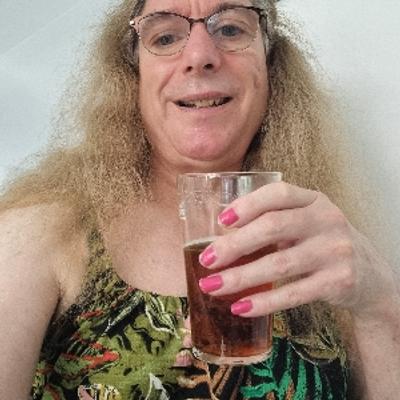
Kirstyn Piper Plummer is a Mom, Wife, Photographer, Reporter, IT Administrator and many other things.