A billboard in Ohio declaring, “No child has two moms. No child has two dads.” was designed to make a statement about LGBTQ+ families.
Instead, it started a much bigger conversation.
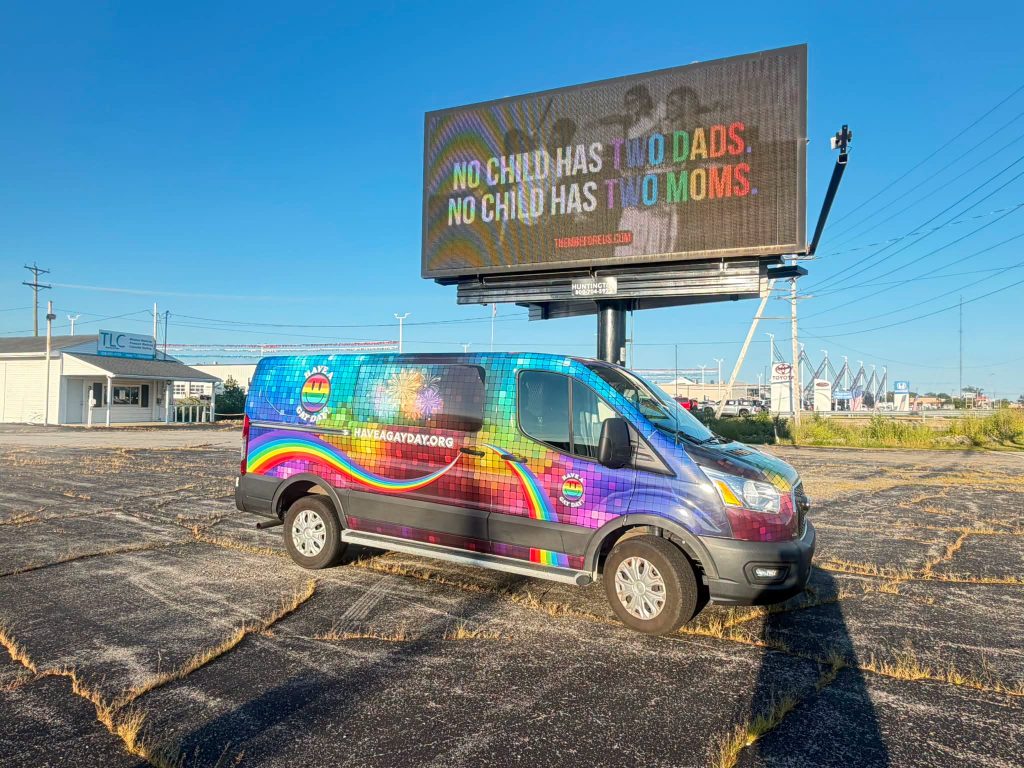
The billboard quickly spread across social media, where thousands of people—including LGBTQ+ parents, allies, educators, faith leaders, and everyday families—responded with photographs, personal stories, and one consistent message:
Our families are real.
For many, the sign wasn’t simply expressing an opinion about same-sex parenting. It was telling children raised by two moms or two dads that the families they know and love somehow don’t count.
That message didn’t go unanswered.
A Message Directed at LGBTQ+ Families
The billboard’s wording leaves little ambiguity about who it was intended to target.
By declaring that “No child has two moms” or “two dads,” the sign dismisses families headed by same-sex couples, despite the fact that thousands of children across the United States are raised by LGBTQ+ parents through adoption, foster care, surrogacy, donor conception, or previous relationships.
Critics argue that while every child has biological origins, parenting is about far more than genetics.
Children experience family through the people who comfort them after nightmares.
The adults who help with homework.
The parents who cheer from the sidelines at soccer games.
More Stories from QueerDispatch
The people who celebrate birthdays, graduations, and holidays.
For those children, those parents are simply “Mom” and “Dad”—or “Mom and Mom,” or “Dad and Dad.”
No roadside billboard changes that reality.
The Internet Answered With Real Families
Rather than responding only with outrage, many people answered the billboard with something deeply personal.
Photos of two moms reading bedtime stories.
Two dads teaching children to ride bicycles.
Families gathered around birthday cakes.
Parents celebrating first days of school and graduation ceremonies.
Across Facebook, Instagram, TikTok, and other platforms, LGBTQ+ families shared snapshots of ordinary life—because that was the point.
The overwhelming response wasn’t political.
It was personal.
Children know who loves them.
Have a Gay Day Turned Protest Into Visibility
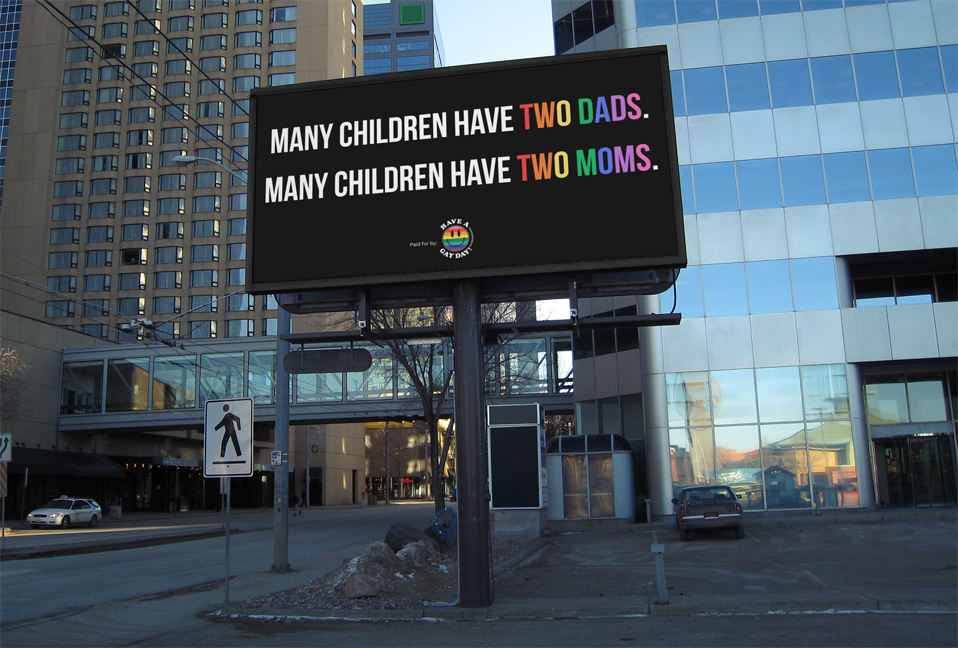
One of the most visible responses came from Ohio nonprofit Have a Gay Day, which initially drew attention by placing one of its brightly decorated vehicles in front of an anti-LGBTQ+ billboard.
Since then, the organization has continued expanding its campaign.
In a recent video update, Have a Gay Day shared that community support following the billboard controversy has helped fund additional affirming billboards across Ohio. The organization also highlighted that the campaign extends far beyond roadside signs.
According to the group, donations help support community outreach, direct assistance, educational initiatives, and programs serving LGBTQ+ people throughout the state. Organizers said every billboard is meant to send a simple message to anyone who sees it:
You belong here.
It’s a striking contrast.
One campaign sought to question whether LGBTQ+ families exist.
The other is raising money to remind those families—and especially LGBTQ+ youth—that they are seen, valued, and loved.
The Billboard Doesn’t Just Affect LGBTQ+ Families
Although the billboard is clearly aimed at same-sex parents, many people pointed out that its narrow definition of family reaches much further.
It overlooks adopted children whose parents are not biologically related to them.
It ignores foster families who provide stability during some of a child’s most difficult moments.
It dismisses grandparents raising grandchildren.
It also fails to reflect the lives of millions of children growing up in blended families after divorce, where a stepmother or stepfather may play every role a parent does.
Those families were never the apparent target of the billboard.
Yet many found themselves erased by it anyway.
The more people discussed the message, the more they recognized that it wasn’t simply rejecting LGBTQ+ families.
It was reducing family itself to a single, rigid definition that doesn’t match how millions of children actually live.
Children Are Listening
Perhaps the greatest concern expressed by parents and advocates wasn’t about adults.
It was about children.
A child with two moms may wonder why a billboard says their family isn’t real.
A child with two dads may ask why strangers are questioning the people who tuck them into bed each night.
A child raised by grandparents or foster parents may wonder whether their family counts, too.
Public messages like these don’t exist in isolation.
They become conversations in classrooms.
Questions around dinner tables.
Sometimes, they become ammunition for bullying.
Words matter—especially when children are the ones hearing them.
Why It Matters
Every child has biological origins.
But family has never been defined by biology alone.
Across the United States, children are raised by adoptive parents, foster parents, grandparents, guardians, stepparents, single parents, and LGBTQ+ parents.
Those families are real.
Those children are real.
The overwhelming response to the Ohio billboard demonstrated something its creators may not have expected.
When one group tries to narrow the definition of family, communities often respond by widening it.
Thousands of people chose not to answer exclusion with exclusion.
Instead, they answered with photographs of bedtime stories, birthday parties, school plays, scraped knees, hugs, graduations, and everyday moments that define parenthood far better than a slogan ever could.
Because at the end of the day, children rarely measure family by biology or politics.
They measure it by love.
And no billboard can take that away.
Read More
- Hungary Moves to Undo Anti-LGBTQ+ ‘Propaganda’ Rules as Turkey Detains 150 Protesters
- California’s Six New LGBTQ Protection Laws: What They Mean for Transgender Residents
- Saddle Lake Cree Nation Turns Treaty Rights Into a Shield for Trans Lives
- Australia’s High Court Ends Tickle v. Giggle Appeal, Leaving Trans Discrimination Win Intact.