There’s a certain kind of political gamble that only works if you believe you’ll never be the one caught underneath it.
Caitlyn Jenner has spent years aligning herself with conservative politics—platforms that have, time and again, targeted transgender people. From supporting candidates who push anti-trans legislation to downplaying the real-world harm of those policies, she has positioned herself as the “acceptable” trans person in spaces that are actively hostile to the rest of the community.
And now, she wants an exception.
Reports and ongoing discussions around passport gender markers—especially under shifting federal policies—have highlighted a growing issue: some trans individuals who supported restrictive policies are now facing the consequences of those same systems. Jenner, notably, has voiced frustration about being treated the same as other transgender people when it comes to documentation.
She wants an “F” on her passport.
Not an “X.” Not a bureaucratic compromise.
An “F.”
The same recognition that countless trans people have been fighting for—and are increasingly being denied.
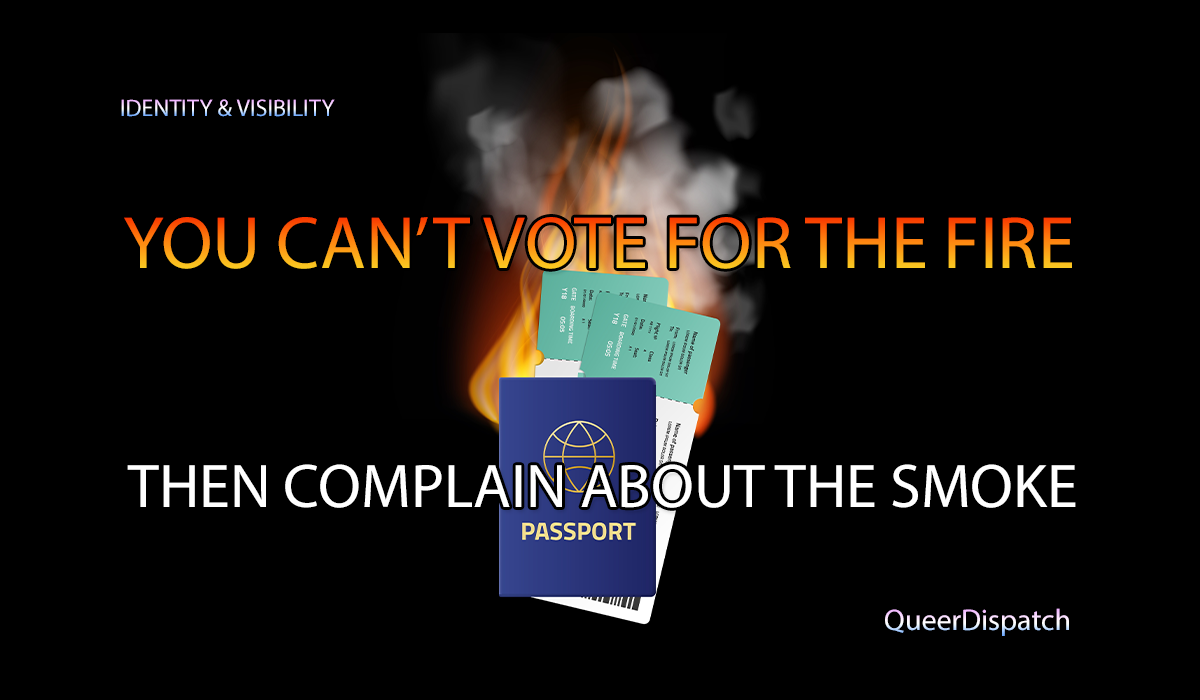
You Can’t Vote for the Fire and Then Complain About the Smoke
This is the contradiction at the heart of the moment.
For years, anti-trans policy efforts have been framed as targeting “others”—athletes, kids, people in bathrooms, people in schools. The implication has always been that there are “good” trans people who won’t be affected.
But policy doesn’t work like that.
When you support systems that restrict gender recognition, you don’t get to carve out a personal exemption later. Bureaucracy is blunt. It doesn’t care about celebrity, wealth, or proximity to power—not when the rules are written to exclude.
More Stories from QueerDispatch
And now, the very framework that Jenner helped legitimize is doing exactly what it was designed to do: deny.
Respectability Politics Has a Cost
Jenner’s political positioning has always leaned on a familiar argument: that acceptance can be earned by distancing from the rest of the community.
Be quieter. Be more palatable. Align with power.
But history has shown, over and over again, that this strategy doesn’t protect people. It isolates them.
Because once rights become conditional—once they depend on being the “right kind” of trans person—they’re no longer rights at all. They’re privileges. And privileges can be revoked.
This Isn’t Just About One Person
It would be easy to write this off as hypocrisy—and yes, there’s plenty of that here.
But the bigger story is what it reveals.
There is a growing divide between public figures who leverage their identity for access and everyday people who are left dealing with the fallout. When someone with Jenner’s platform supports policies that harm trans people broadly, it doesn’t just affect strangers. It shapes the legal and cultural environment that everyone—including her—has to live in.
This is what happens when visibility is disconnected from accountability.
You Don’t Get to Trade Away Rights You Still Need
There’s a hard truth underneath all of this:
You can’t bargain away the rights of your community and expect yours to remain intact.
Not in the long term.
Not when the same arguments used against others can—and will—be used against you.
Jenner wanted proximity to power. She wanted to be seen as the exception.
But systems built on exclusion don’t create exceptions.
They create casualties.
Follow this blog on Mastodon or the Fediverse to receive updates directly in your feed.

Kirstyn Piper Plummer is a Mom, Wife, Photographer, Reporter, IT Administrator and many other things.



Read More
- Sophie Wilson Helped Build the Technology Powering Your Phone
- Ohio Billboard Claiming ‘No Child Has Two Moms or Two Dads’ Sparks Backlash—And a Wave of Support for LGBTQ+ Families
- What If Staying Stops Feeling Safe? The Fear of Being Trans in America
- Trump Administration Investigates Massachusetts School Over Trans Student — But Key Facts Are Disputed