How exclusion politics could derail the Smithsonian’s long-awaited project—and why that’s the point
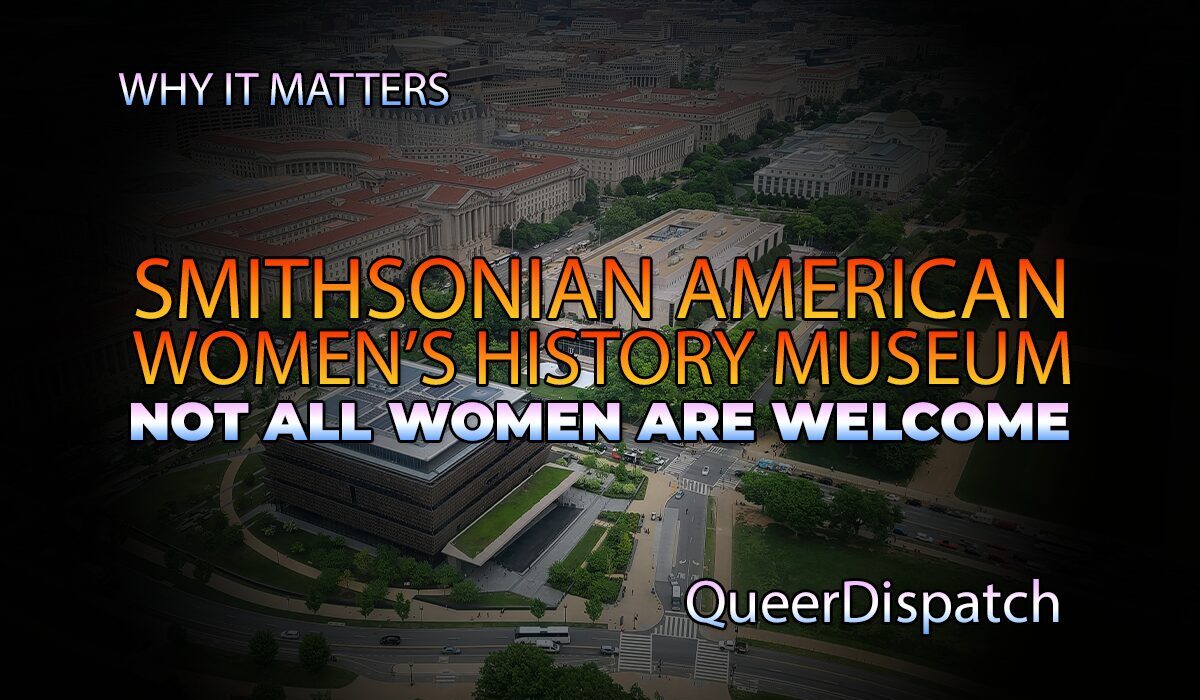
WASHINGTON, D.C. — For decades, advocates have pushed for a Smithsonian American Women’s History Museum—a national space to tell the stories that history books too often ignored.
Now, just as that vision inches closer to reality, it’s being threatened—not by lack of interest, not by funding, but by something far more deliberate:
Who gets to count as a woman.
The Fight Isn’t About a Museum. It’s About Erasure.
Recent Republican-backed provisions tied to the museum’s development would exclude transgender women from representation in exhibits.
On paper, it’s framed as a “definition issue.”
In practice, it’s something else entirely:
A gatekeeping mechanism designed to rewrite history before it’s even built.
Advocates, historians, and members of Congress—including the Democratic Women’s Caucus—are warning that these last-minute changes could collapse bipartisan support that has taken years to build.
And that’s not an accident.
A Pattern We’ve Seen Before
This isn’t happening in isolation.
Across the country, we’re seeing a coordinated effort to:
- Remove LGBTQ+ stories from classrooms
- Restrict how gender is discussed in public spaces
- Redefine identity through legislation
- And now—control how history itself is recorded
Because history isn’t just about the past.
More Stories from QueerDispatch
It’s about who gets remembered.
The Real Stakes: Who Gets Written In
The Smithsonian Women’s History Museum was never meant to be small.
It was meant to tell the full, messy, powerful story of women in America—across race, class, identity, and lived experience.
That includes:
- Black women who reshaped civil rights movements
- Immigrant women who built communities from nothing
- Queer women who fought for visibility
- And yes—trans women who have always been part of that story, whether acknowledged or not
To remove trans women now isn’t just exclusion.
It’s historical revisionism in real time.
Bipartisanship Was the Point—Until Inclusion Was
For years, this museum project enjoyed rare bipartisan support.
That only started to fracture when inclusion became explicit.
Let that sit.
The idea of honoring women? Broadly supported.
The idea of defining which women matter? Suddenly controversial.
And that contradiction tells you everything.
This Is Bigger Than One Museum
If these provisions succeed, the impact won’t stop at the Smithsonian.
It sets a precedent:
That public institutions—especially cultural ones—can be pressured into sanitizing reality to fit political narratives.
That inclusion is optional.
That identity is negotiable.
That some people’s existence can be edited out entirely.
Why It Matters
Because you don’t build a national museum just to display artifacts.
You build it to answer a question:
Who are we?
And if the answer starts with exclusion, then the museum isn’t telling history.
It’s rewriting it.
The Bottom Line
The fight over the Smithsonian American Women’s History Museum isn’t about logistics, definitions, or technicalities.
It’s about whether we are willing to acknowledge the full truth of who has shaped this country.
Or whether we’re going to let politics decide which stories are allowed to exist.
Because once you start erasing people from history…
You make it easier to erase them from the present, too.
Follow this blog on Mastodon or the Fediverse to receive updates directly in your feed.

Kirstyn Piper Plummer is a Mom, Wife, Photographer, Reporter, IT Administrator and many other things.