
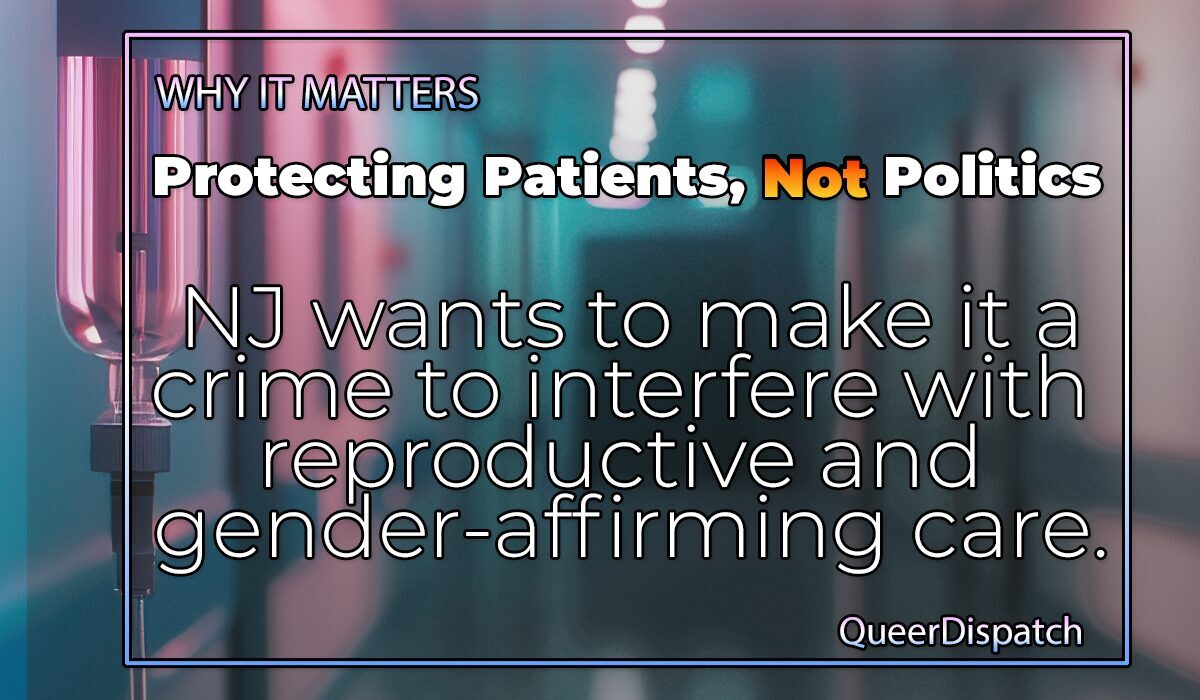
For years, New Jersey has positioned itself as one of the nation’s strongest legal protections for people seeking reproductive healthcare and gender-affirming care. Now, lawmakers want to ensure those protections extend beyond the doctor’s office—and all the way to the front door.
Legislation sponsored by Assemblywomen Shanique Speight, Ellen Park, Annette Quijano, and Luanne Peterpaulwould create a new criminal offense in New Jersey: “interference with reproductive health care services.” If enacted, the bill would make it illegal to intimidate, threaten, or physically obstruct someone attempting to access lawful reproductive or gender-affirming healthcare.
The proposal comes as healthcare providers across the country continue to report increasing harassment, protests, threats, and attempts to prevent patients from receiving legally protected medical care.
Protecting Patients—Not Silencing Protest
The legislation is narrowly focused on conduct that interferes with access to healthcare.
Peaceful protest, advocacy, and public disagreement would remain protected under the First Amendment. What the bill targets are actions that cross the line into intimidation or physical interference—such as blocking clinic entrances, threatening patients or staff, or otherwise preventing someone from receiving lawful medical treatment.
Under the proposal, those actions could carry criminal penalties.
Supporters argue the legislation mirrors the principle behind existing laws designed to protect access to medical facilities: people should not have to fear harassment or violence while seeking healthcare.
Gender-Affirming Care Explicitly Included
One of the most significant aspects of the bill is that its protections extend not only to reproductive healthcare—including abortion and contraception—but also to gender-affirming healthcare.
That means transgender people seeking hormone therapy, surgical consultations, mental health services, or other medically necessary gender-affirming treatment would receive the same legal protections against interference as any other patient seeking lawful healthcare.
At a time when gender-affirming care has become the subject of political attacks across much of the country, New Jersey lawmakers are instead moving to reinforce legal protections around access.
The proposal reflects New Jersey’s broader approach over the past several years, which has included executive actions and legislation positioning the state as a safe haven for both reproductive healthcare and gender-affirming care.
A Response to Escalating Harassment
Healthcare facilities that provide reproductive services have long experienced protests and patient intimidation.
More Stories from QueerDispatch
In recent years, providers offering gender-affirming care have increasingly faced similar campaigns, including bomb threats, coordinated harassment, online doxxing, and political pressure designed to discourage providers from offering care.
Across the United States, several hospitals have paused or restricted gender-affirming services following political pressure or threats, even where such care remains legal.
Supporters of the New Jersey legislation argue that patients should never have to navigate intimidation simply to attend a medical appointment.
Why It Matters
For transgender people, this legislation represents more than another healthcare bill.
It acknowledges a reality many in the LGBTQIA2S+ community already understand: accessing medical care has increasingly become a political act.
Whether someone is seeking hormone replacement therapy, reproductive healthcare, fertility treatment, prenatal care, or abortion services, lawmakers sponsoring the bill argue that the path to a medical appointment should not include harassment, intimidation, or physical obstruction.
Critics may frame the proposal as limiting protests.
The legislation itself, however, is aimed at conduct—not opinions.
People remain free to oppose gender-affirming care or abortion, advocate for legislative change, and demonstrate peacefully. What they would not be permitted to do is interfere with another person’s ability to obtain healthcare that is legal under New Jersey law.
For many LGBTQIA2S+ advocates, that’s exactly the point.
Healthcare decisions belong between patients and their medical providers—not whoever happens to be standing outside the clinic door.
Read More
- Signed: New Jersey Makes Gender-Affirming Healthcare Protections Law
- New Mexico Says It Will Use State Money to Keep Gender-Affirming Care Available to Trans Youth
- Court Rejects Anti-Trans Activist’s Appeal After False Claims About Trans Soccer Player
- Appeals Court Blocks Trump Administration’s ‘Gender Ideology’ Conditions on Local Grants